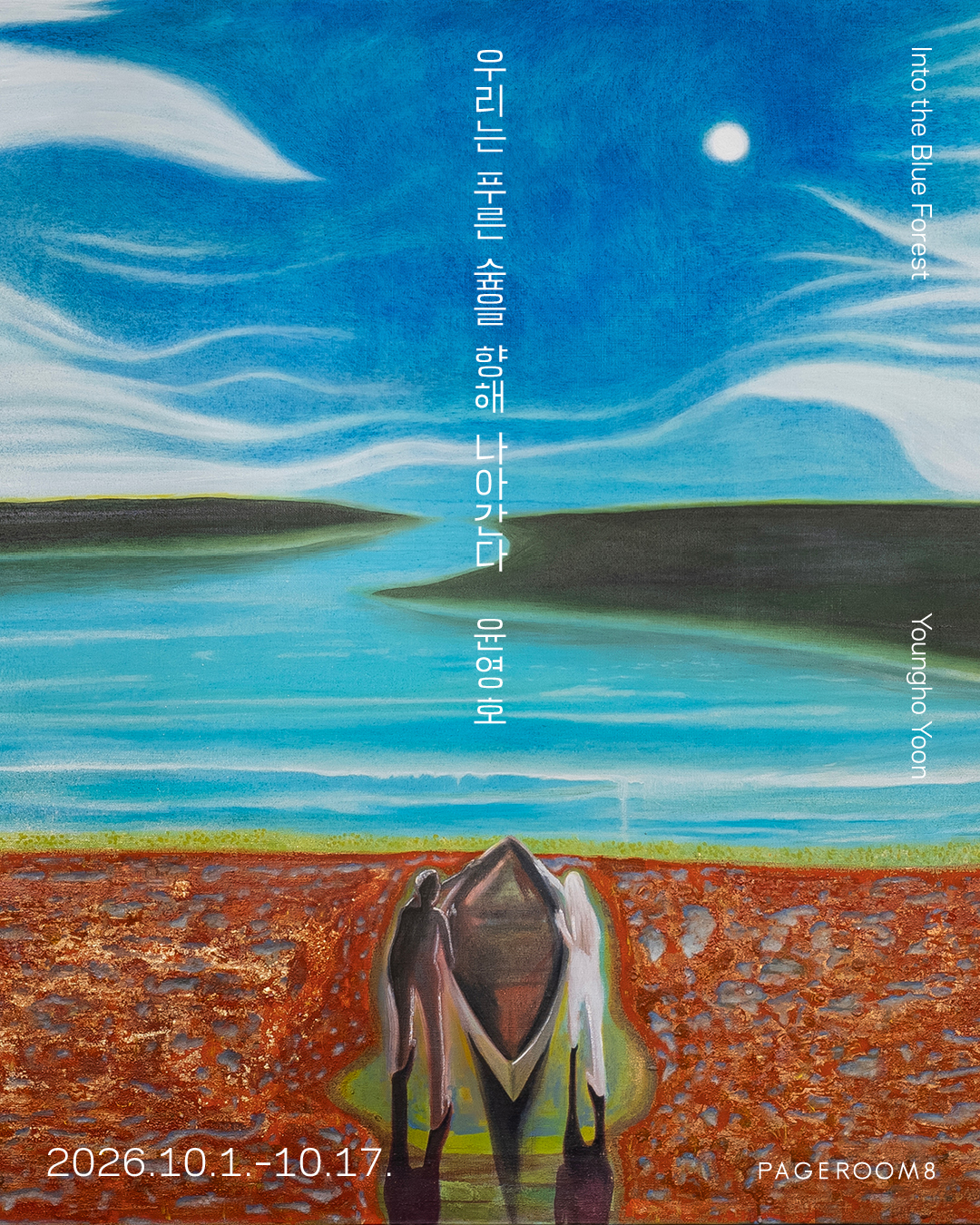
■ 전시 정보
▪ 전시 제목 : 우리는 푸른 숲을 향해 나아간다 Into the Blue Forest
▪ 참여 작가 : 윤영호 Youngho Yoon
▪ 전시 기간 : 2026년 10월 1일(목) ~ 10월 18일(일) *하루 연장된 전시 기간입니다.
▪ 아티스트 앤 토크 : 10월 10일 토요일 오후 3시 (이후 오프닝 리셉션이 이어집니다)
▪ 운영 시간 : 수요일 ~ 일요일 13:00 ~ 18:00/ 월, 화요일 휴무
( * 이번 전시는 특별히 일요일과 공유일에 정상 운영합니다 )
▪ 전시 장소 : 페이지룸8 (서울시 종로구 옥인길 18, 3층)
▪ 전시 장르 및 규모 : 회화 17점
▪ 주최 및 주관 : 페이지룸8
▪ 글 : 박정원
▪ 디자인 : 오렌지슬라이스타입
▪ 사진 : 양이언
▪ 후원 : 문화체육관광부, 한국문화예술위원회, 서울문화재단 K-Art 청년창작자지원사업
▪ 문의 : 02-732-3088/ pageroom8@naver.com
■ 전시 서문
미지의 세계로*
* 글 제목은 윤영호 작가의 작품 〈미지의 세계로〉에서 차용하였다
박정원 페이지룸8 디렉터
윤영호 작가는 현실과 맞닿은 채 작동하는 무의식 속 미지의 세계를 회화로 표현한다. 작가는 미지의 세계를 “푸른 숲”으로 명명하며 현실과 이상, 실체와 환영 그리고 보이는 것과 보이지 않는 것들이 교차하는 경계 지점에서 느끼는 감각을 이미지로 구현한다.
2013년 이탈리아 밀라노에서 학부를 졸업하고, 2016년 영국에서 석사 과정을 마친 윤영호 작가는 초기작에서 내면의 감정과 에너지를 추상적으로 표출하는 미술적 방법에 집중했다. 그러나 2020년경부터 작가가 고전 문학과 철학, 클래식 음악 등에서 받아들인 공감각적 소재들이 그의 화면을 구상으로 이끌었다. 이를테면 밤의속성에 영감을 받아 작곡한 쇼팽의 ‘녹턴(Nocturne)’은 윤영호 작가의 밤 풍경으로 재해석되었다. 이것이 그의 첫 구상 작업에 해당한다. 이후 윤영호 작가는 대기와 자연 그리고 천체 등 누구나 보고 있지만 인간적인 감정과 불안으로 인해 자각하기 어려운, 순수한 감각의 기원을 찾아 나선다. 이번에 소개되는 작품 17점을 제작 순서대로 살펴보면 작가가 가고자 했던 방향을 함께 따라갈 수 있을 것이다.
미술사의 서사에서 작가 개인의 작품 세계가 주로 구상에서 추상으로 변모하는 경우가 많다는 것을 알 수 있지만, 그와 반대로 윤영호 작가는 6년 전 추상에서 구상으로 전환점을 맞았다. 그 배경에는 ‘녹턴’이라는 곡이 있다. 한국으로 돌아와 이태원과 해방촌 등 실재하는 서울의 장소들이 밤의 시간과 맞물리면서, 음악으로부터 파생된 공감각이 형상을 얻을 수 있었다. 형상의 유무로 구상과 추상을 나누고 작업의 변곡점을 구분할 수 있지만, 사실 작가의 최근작에서 느낄 수 있는 강한 색채 대비와 서정적인 감수성은 초기 추상 회화에서도 엿볼 수 있다. 필자는 실체 없이 부유하던 감각이 형체를 지닌 대상에 투영되면서, 마침내 우리가 볼 수 있는 ‘미지의 세계’로 들어서기 시작했다고 생각한다. 이는 작가가 이번 전시의 모티프로 삼은 단테의 『신곡』이 지옥과 연옥, 천국의 경계를 넘어서며 인간적 갈등 끝에 진정한 자신을 찾는 서사로 엮여 있는 것과 같다. 유학을 마치고 귀국한 후 환경이 바뀌면서 작업의 주제 의식이 짙어지고 소재가 뚜렷해짐에 따라 제작 기법 역시 전환기를 맞았다. 그 시간을 거치며 캔버스에 묵묵히 그려 나간 형상이 켜켜이 쌓여 층위가 생긴 것이다. 작가는 이러한 상황을 무의식적으로 감지하고 여러 세기를 건너온 단테의 여정에 함께한다.
그 여정은 1년여간 그린 ‘방랑자의 시선’ 연작을 통해 가늠할 수 있다. 수면에 비친 나무 그림자가 1인칭 시점으로 그려지고, 어스름한 새벽이나 밤으로 보이는 푸른 풍경 속에 연달아 등장한다. 반면 시점이 전환되면서 자의식을 지닌 〈나무의 시선〉이 등장하기도 한다. 이후 ‘방랑자의 시선’은 수평선으로 나뉘는 실제 풍경과 그림자가 공존하는 수채화 〈보팅 호수〉로 이어진다. 마치 꿈에서 깨어나거나 공상에서 빠져나오는 듯한 감정은 〈푸른 숲에 머물다〉에 잠시 깃든다. 잔잔한 밤 풍경 오른쪽 한켠에 사람의 실루엣이 자리해 있어, 부재한 실체와 여전히 남은 기억이 공존한다. 작품의 제목처럼 작가가 그 풍경 속에 한동안 머물며 마주했을 잔상을 상상해 본다. 그 머문 시간은 시공을 초월해 환영과 실체가 경계 없이 오가는 중에도 끝내 남는 것을 향해 멈춰 선, 『신곡』의 연옥과 같은 시간이 아니었을까. 그렇게 미끄러지듯 제자리로 돌아오면, 그곳에 증표처럼 이미지가 남는다.
이러한 여정 끝에 작가의 화면에 자리한 푸른 숲은 불타거나 어둠에 휩싸인 채, 몸을 던져 건널 수 있는 저 너머의 공간으로 표현된다. 그리고 작가가 그 안에 작고 반짝이는 알레고리이자 메시지를 미술적 방법으로 다듬어 남길수록 푸른 숲은 점점 생생해진다. “우리는 푸른 숲을 향해 나아간다”라는 문구에서 전해지는 긍정적인 방향성은 이미지 자체에서도 비롯될 뿐 아니라 작가가 구현하는 표면 질감과 색채 그리고 화면 구성에서도 나온다.
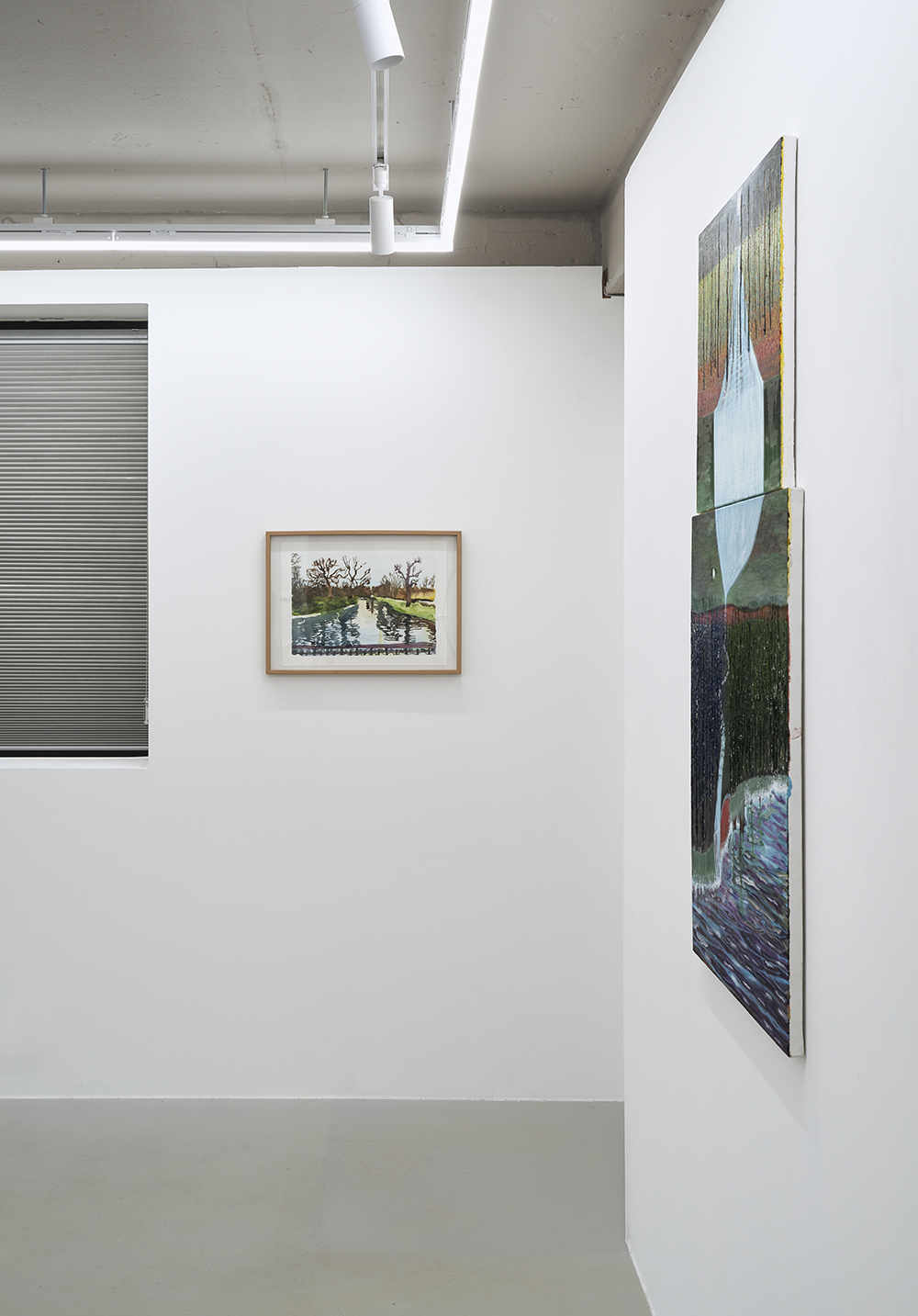
한편 〈메멘토모리〉와 〈미래를 내다보는 유리구슬〉은 단테의 『신곡』 서사에서 한 걸음 물러나, 작품과 작품 사이를 잇는 내러티브에 쉼표를 찍어 전시의 흐름을 잠시 환기하는 역할을 한다. 〈두 개의 달과 폭포〉는 캔버스 두 개를 다른 차원에 존재하는 세상으로 상정해 결합한 작품이다. 천국의 첫 번째 하늘이 달의 하늘이라는 『신곡』의 모티프를, 두 개의 하늘에 뜬 달로 변주하고, 이를 두 세계를 잇는 폭포와 강의 물길로 풀어낸다. 이때 두 세계는 각각 천국과 연옥을 상징한다. 푸른 주조색은 작품마다 채도를 달리하지만, 하늘과 물 그리고 배경 등에 사용되면서 개별 작품들이 ‘푸른 숲’과 유기적으로 연결되도록 한다.
작가는 유화 물감과 아크릴 물감, 먹, 페이스트 등을 활용해 표면의 질감과 색채를 만들고, 상상 속 풍경의 시간대와 그림자를 구현한다. 이러한 표면 처리 방식은 작품에 대한 몰입을 배가한다. 〈불타는 숲을 바라보는 남녀〉에서 불과 대비되는 하얀 두 줄기 폭포, 〈푸른 숲을 뛰어가는 남녀〉에서 펄감을 더해 표현한 초승달의 미세하고 은은한 빛, 마침내 열린 듯 탁 트인 하늘과 굴곡진 대지가 대비되는 〈미지의 세계〉의 요철과 노이즈가 그 예이다.
『신곡』의 지옥편 첫 장면은 단테가 인생의 한가운데에서 길을 잃고 어두운 숲 속에 서 있는 자신을 발견하면서 시작된다. 반면 연옥편에서 지상 낙원의 신성한 숲은 울창하고 푸르며 새소리와 바람 소리가 가득한 곳으로 묘사되고, 어두운 숲과 대비된다. 푸른 숲이 이렇게 상반된 모습으로 그려지는 상징이기에, 윤영호 작가의 푸른 숲은 유토피아이기보다는 푸코가 말한 헤테로토피아, 즉 현실에 존재하면서도 현실과 다른 질서로 작동하는 공간에 가깝다.
어둠과 빛이 혼재하는 〈녹턴〉은 마치 폭풍전야처럼 작가의 푸른 숲에 대한 서막을 알리는 것과 다름없다. 단테의 『신곡』을 통해 윤영호 작가는 예술에 대한 신념과 삶에 대한 태도, 그리고 그 사이에서 균형감을 되찾으려는 의지를 넌지시 내비친다. 작가가 제안하는 ‘푸른 숲’은 길을 잃은 방랑자의 숲이자 안내자 베르길리우스의 숲이며, 자신이 어디에 있는지 모르는 이를 위한 숲이다.
Into the Unknown*
*The title of this essay is borrowed from Yoon Young-ho's work 'Into the Unknown'.
Park Jung-won, Director, Pageroom8
Yoon Young-ho paints an unknown world: a realm of the unconscious that operates while remaining in contact with reality. The artist calls this unknown world the "Blue Forest": a place where reality meets the ideal, substance meets illusion, and the visible meets the invisible. His paintings give form to the sensations that arise at these points of intersection.
Yoon completed his undergraduate studies in Milan, Italy, in 2013 and his master's degree in the United Kingdom in 2016. His early work focused on expressing inner emotion and energy through abstraction. Around 2020, however, synesthetic material he drew from classical literature, philosophy, and classical music began to lead his canvases toward figuration. Chopin's Nocturnes, composed in response to the nature of night, were reinterpreted as Yoon's own nocturnal landscapes. These became his first figurative works. He then set out to find the origins of pure sensation in the atmosphere, nature, and the celestial bodies. These are things everyone sees but few truly perceive, because human emotion and anxiety get in the way. Viewed in the order in which they were made, the seventeen works in this exhibition let us follow the direction the artist has sought to take.
In art history, an artist's practice more often moves from figuration toward abstraction. Yoon, by contrast, reached his turning point six years ago, moving from abstraction to figuration. Behind this shift lies the Nocturne. After his return to Korea, real places in Seoul such as Itaewon and Haebangchon became bound up with the hours of night. Through that connection, the synesthesia born of music was able to take on form.
One might separate figuration from abstraction, and mark the turning points of a practice, by the presence or absence of form. Yet the strong chromatic contrasts and lyrical sensibility of the artist's recent work can already be glimpsed in his early abstract paintings. In my view, sensations that once drifted without substance were projected onto tangible subjects. Through that projection, they finally began to enter an "unknown world" that we, too, can see. This parallels Dante's Divine Comedy, the motif of this exhibition, in which the poet crosses the boundaries of Hell, Purgatory, and Paradise and, through human struggle, finds his true self.
After completing his studies abroad and returning home, the artist's surroundings changed. His thematic concerns deepened and his subject matter grew more distinct, and his techniques reached a turning point as well. Over that period, the forms he patiently built up on canvas accumulated into layers. The artist sensed this unconsciously and joined Dante on a journey that has crossed many centuries.
That journey can be traced through the Wanderer's Gaze series, painted over roughly a year. Reflections of trees on the surface of water are rendered from a first-person perspective. They appear one after another in blue landscapes that seem to belong to dim dawn or night. Elsewhere the viewpoint shifts, and a self-aware The Tree's Gaze emerges. The Wanderer's Gaze then continues into the watercolor Boating Lake, in which a real landscape divided by the horizon coexists with its shadow.
A feeling akin to waking from a dream or stepping out of a reverie briefly settles in Lingering in the Blue Forest. A human silhouette occupies one corner on the right of the tranquil night scene, so that an absent presence and a lingering memory coexist. As the title suggests, we can imagine the afterimages the artist must have encountered while he remained in that landscape for a time. Perhaps that interval was like Dante's Purgatory. It is a time beyond time and space, in which illusion and substance pass freely back and forth, and yet it comes to rest before what ultimately remains. And when one slips quietly back to where one began, an image is left behind, like a token.
At the end of this journey, the Blue Forest that occupies the artist's canvases appears burning or shrouded in darkness. It is a space beyond, one that can be crossed only by casting oneself into it. The more carefully the artist refines and leaves within it small, glimmering allegories and messages through painterly means, the more vivid the Blue Forest becomes. The positive sense of direction in the phrase "We move toward the Blue Forest" comes from the imagery itself. It also comes from the surface textures, colors, and compositions the artist creates.
Meanwhile, Memento Mori and The Glass Orb That Sees the Future step back from the narrative of the Divine Comedy. They act as a pause in the narrative linking one work to the next, briefly refreshing the flow of the exhibition. Two Moons and a Waterfall joins two canvases, each conceived as a world existing in a different dimension. It varies the Divine Comedy's motif that the first heaven of Paradise is the Heaven of the Moon by placing a moon in each of two skies. It then unfolds this as the course of a waterfall and a river that connect the two worlds, which symbolize Paradise and Purgatory respectively. The dominant blue changes in saturation from work to work. Used in skies, water, and backgrounds, it binds the individual works organically to the "Blue Forest."
The artist uses oil paint, acrylic, ink, and paste to build surface texture and color, and to render the times of day and the shadows of imagined landscapes. These surface treatments deepen the viewer's immersion. Examples include:
-the two white streams of a waterfall set against the fire in A Man and a Woman Watching the Burning Forest
-the subtle, delicate glow of a crescent moon, rendered with added pearlescence, in A Man and a Woman Running Through the Blue Forest
-the relief and noise of The Unknown World, where a sky that seems finally to open wide contrasts with undulating land
The Inferno of the Divine Comedy opens with Dante finding himself lost in a dark wood, midway through the journey of his life. In the Purgatorio, by contrast, the sacred forest of the Earthly Paradise is described as lush and green, filled with birdsong and the sound of the wind, in contrast to the dark wood. Because the forest is a symbol depicted in such opposing ways, Yoon's Blue Forest is closer to Foucault's heterotopia than to a utopia. It is a space that exists within reality yet operates by an order different from it.
Nocturne, in which darkness and light intermingle, is nothing less than the prelude to the artist's Blue Forest, like the calm before a storm. Through Dante's Divine Comedy, Yoon quietly reveals his convictions about art, his attitude toward life, and his will to regain a sense of balance between the two. The "Blue Forest" he proposes is the forest of the lost wanderer and the forest of Virgil the guide. It is a forest for anyone who does not know where they are.
■ 작가 노트
윤영호, 2026
“The Blue Forest exists nowhere but here. It is a place the artist has built from memory, longing, and color — a landscape we walk toward not with our feet, but with our gaze.”
“푸른 숲은 어디에도 존재하지 않지만 지금 여기 있다. 그것은 작가가 기억과 그리움 그리고 색채로 만든 장소로, 우리는 걸음이 아닌 시선으로 풍경을 향해 나아간다.”
나의 작품에는 미지의 세계로 향하는 인간의 실존에 대한 물음과 고찰이 담겨있다.
현전의 너머는 어두컴컴한 보이지 않는 세계이기 때문에 인간은 불완전한 감정을 느낀다. 흔히들 미래를 이야기할 때 보이지 않는 비가시적 영역이라고 하지만, 우리는 경험을 바탕으로 미래를 예측할 수 있고 상상을 통하여 가시화 할 수 있다. 단테의 <신곡> 서두에는 “인생의 길 한가운데서 나는 올바른 길을 잃고 어두운 숲 속에 서 있었다.” 라는 고백이 등장한다. 이러한 단테의 고백은 중세적 우주관을 넘어 시간의 흐름 속에서 자신을 발견하고 욕망과 이성 사이에서 방랑하는 보편적 인간의 초상이다. 나는 이 고전적 서사를 현대적 시각언어로 재해석 하여 ‘푸른 숲’ 이라는 미지의 세계를 작품에 등장시켰다.
숲은 복수의 다종다양한 층위를 가진 시공간이다. 탐험되지 않은 무의식의 지형, 인간이 통제할 수 없는 자연적 욕동 그리고 치유와 공포가 동시에 깃드는 원초적 공간이다. 단테가 베르길리우스의 인도를 통해 자신과 인생을 바라보았듯이 캔버스에 표현된 세계를 통해 나 자신과 인생을 바라본다. 캔버스는 나와 관람자가 각각의 내면을 응시하는 거울이 된다. 그곳에는 비가시적 영역을 가시화하고 불안을 희망으로 치환시키는 이미지가 담겨있다.
푸른 숲은 희망으로 나아가는 미지의 세계이다. 내가 궁극적으로 푸른 숲을 통해 말하고 싶은 것은 무엇인가? 앞서 말했지만 ‘희망’이란 단어가 제일 먼저 떠오른다. 그것은 너무나 보편적이어서 진부하게 들린다. 여기에 바라보는 관점과 시점을 넣어 부연 설명하자면 ‘미래’라는 단어가 추가된다. 지난 작업들을 떠올려보면 추상이든 녹턴 시리즈이든 과거를 회상하며 특정장소와 시간을 복기하며 작업했다면, 푸른 숲 시리즈는 작품 속에 미래를 내다보는 눈이 함축되어 있다. 이전 작품들이 과거를 바라보고 있다면 푸른 숲의 이미지는 미지의 세계를 보여주는 현재진행형이다. 이미지는 종결(완성) 됐다고 해서 과거로 전락해버리는 것이 아니라 느리지만 계속해서 앞으로 나아가고 있으며 변화하는 자연 속에서 쉼을 얻고 있다.
나에게 달은 위로자(comforter)이다.
언제부턴가 퇴근길에 바깥세상으로 나가면 하늘을 올려다 보면서 달부터 찾는 습관이 생겼다. 오늘하루에 대한 위로를 받을 대상을 찾았던 것 같다. 달을 따라 길을 걸으면 신과 소통하고 있는 느낌이 들었다. 달을 올려다보는 행위에서 신이 나를 응시하고 있는 느낌을 받는다. 나에게 달은 곧 하늘이고 영적인 존재이다. 달무리는 허그를 할 때 팔이 휘감듯이 우리를 포용해준다.
작가로서 나는 삶을 하나의 대상으로 바라보며 존재하기 위해 지각하는 방법과 지각활동이 일어나는 현상을 고찰한다. 그리고 그것이 표현된 실체의 역할에 대해 물음을 던진다. 존재자로서 외부세계와 맞닥뜨렸을 때 일어나는 현상과 동요에 집중한다. 자연, 환경, 사회 및 관계 등 외부적인 것에 접촉되어 반응하는 다양한 인간의 모습을 관찰하고 기록한다. 인간은 물질과 권력에 의해 자유를 보장받거나 그것에 의해 통제된 삶을 살아가기도 한다. 관계에 의해 발생된 어떠한 사건은 정신적, 내면적 충격을 동반하여 불안, 우울, 무기력의 고립된 모습으로 드러난다. 인간은 외부적인 것으로부터 파생된 비가시적인 감정에 괴롭힘을 당한다.
그것으로부터 벗어나기 위해 보이지 않는 것을 믿는 행위와 그것을 추종하는 인간의 모습을 시각화한다.
나는 도식화된 이미지를 재현하는 작업이 아닌 잠재의식 속에 내재된 잔상을 심상과 연결하여 회화 이미지를 만든다. 나에게 시간은 흐르는 물과 같다. 우리는 그 위에 때로는 평온하게 아니면 위태위태하게 서 있다. 끊임없이 변화하고 이동하는 그것의 흐름을 절대 거스를 수 없다.
우리는 어떻게 존재해야하는지에 대해 회화 이미지를 통해 이야기하고자 한다.
살아간다는 행위를…
Artist statement
“The Blue Forest exists nowhere but here. It is a place the artist has built from memory, longing, and color — a landscape we walk toward not with our feet, but with our gaze.”
My work holds questions and reflections on human existence as it moves toward the unknown.
What lies beyond the present is a dark, unseen world, and so we feel incomplete. We often speak of the future as an invisible realm. Yet we can anticipate it through experience and make it visible through imagination. At the opening of Dante's Divine Comedy comes a confession: "In the middle of the journey of our life, I lost the right path and found myself in a dark forest." This confession reaches beyond the medieval cosmology. It is a portrait of universal humanity, discovering oneself within the passage of time and wandering between desire and reason. I have reinterpreted this classical narrative in a contemporary visual language, bringing an unknown world, the "Blue Forest," into my work.
The forest is a time-space of many diverse layers. It is an unexplored terrain of the unconscious, a place of natural drives beyond human control, and a primal space where healing and fear dwell together. Just as Dante looked at himself and his life through Virgil's guidance, I look at myself and my life through the world rendered on canvas. The canvas becomes a mirror in which both the viewer and I gaze into our own inner selves. It holds images that make the invisible visible and transform anxiety into hope.
The Blue Forest is an unknown world that leads toward hope. What, ultimately, do I want to say through the Blue Forest? As I have said, the first word that comes to mind is "hope." It is so universal that it may sound like a cliché. But when I add the dimension of perspective, of where and how one looks, another word joins it: "future."
Looking back on my earlier work, whether the abstractions or the Nocturne series, I worked by recalling the past and revisiting particular places and moments. The Blue Forest series, by contrast, carries within it an eye that looks toward the future. If my earlier works gazed backward, the images of the Blue Forest are in the present progressive tense, revealing an unknown world as it unfolds. An image does not fall into the past simply because it is finished. It keeps moving forward, slowly, and finds rest within ever-changing nature.
For me, the moon is a comforter.
At some point, I fell into the habit of looking up at the sky for the moon whenever I stepped outside on my way home. I think I was searching for something to console me for the day. Walking beneath the moon, I felt as though I were speaking with God. In the act of looking up at it, I feel that God is gazing back at me. For me, the moon is the sky itself, a spiritual presence. Its halo embraces us the way arms wrap around someone in a hug.
As an artist, I regard life as an object of inquiry. I reflect on how we perceive in order to exist and on the phenomena through which perception takes place. I then question the role of the forms in which this is expressed. I focus on the phenomena and disturbances that arise when we, as beings, encounter the external world. I observe and record the many ways people respond when they come into contact with what lies outside them: nature, environment, society, and relationships.
Material wealth and power can guarantee our freedom, or they can come to govern our lives. Events born of relationships bring mental and inner shock, which surface in isolated states of anxiety, depression, and lethargy. We are tormented by invisible emotions that arise from the world outside us. To escape them, people come to believe in what cannot be seen and to follow it. I visualize this act of belief and the people who follow.
Rather than reproducing schematic images, I create paintings by connecting the afterimages embedded in the subconscious to inner imagery. For me, time is like flowing water. We stand upon it, sometimes calmly, sometimes precariously. We can never go against its current, which is ever-changing and ever-moving.
Through painted images, I want to speak about how we ought to exist.
The act of living…
(Yoon Youngho)
■ 작품 이미지
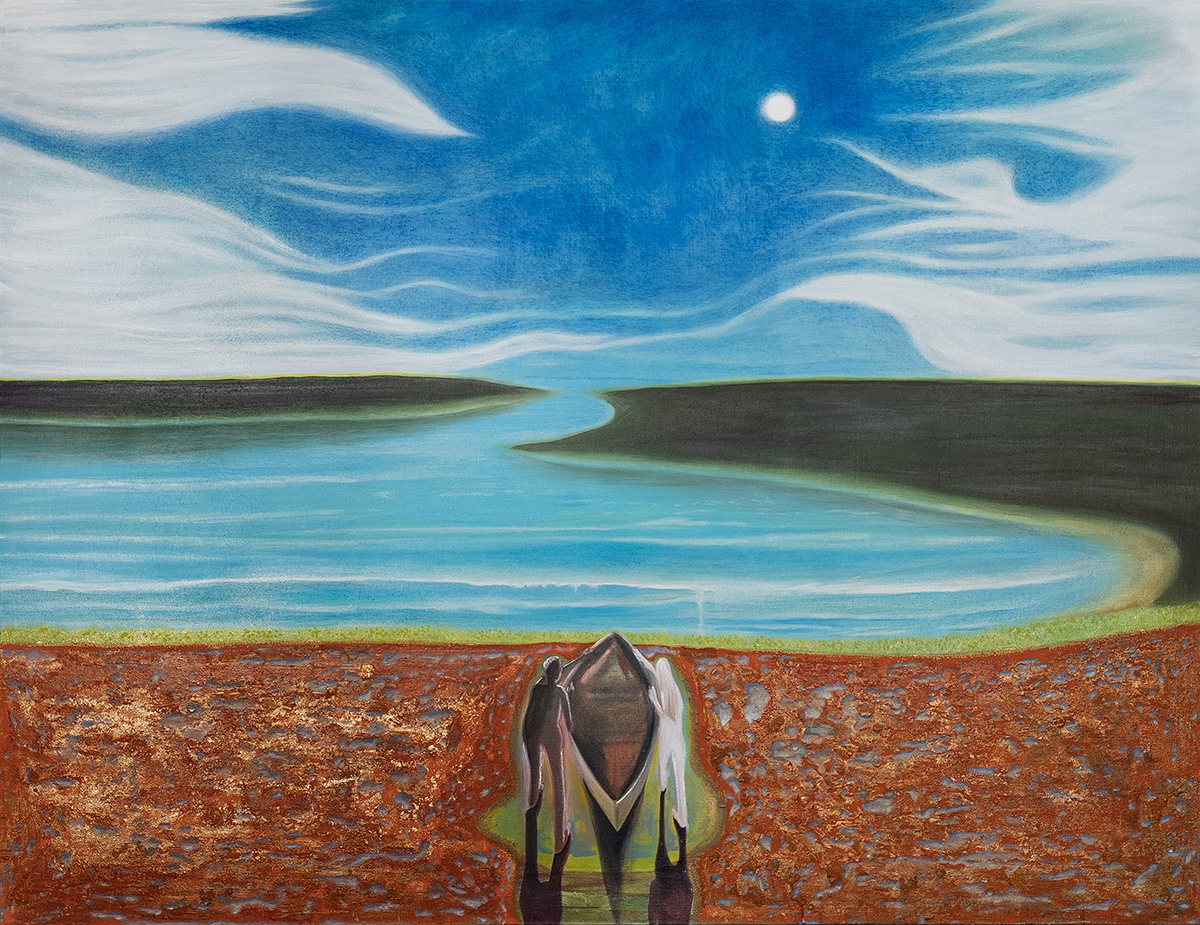
1. 윤영호 Youngho Yoon, 미지의 세계로 Into the Unknown, 캔버스에 먹과 유채 Oil and oriental ink on canvas, 91 x 116.8 cm, 2026
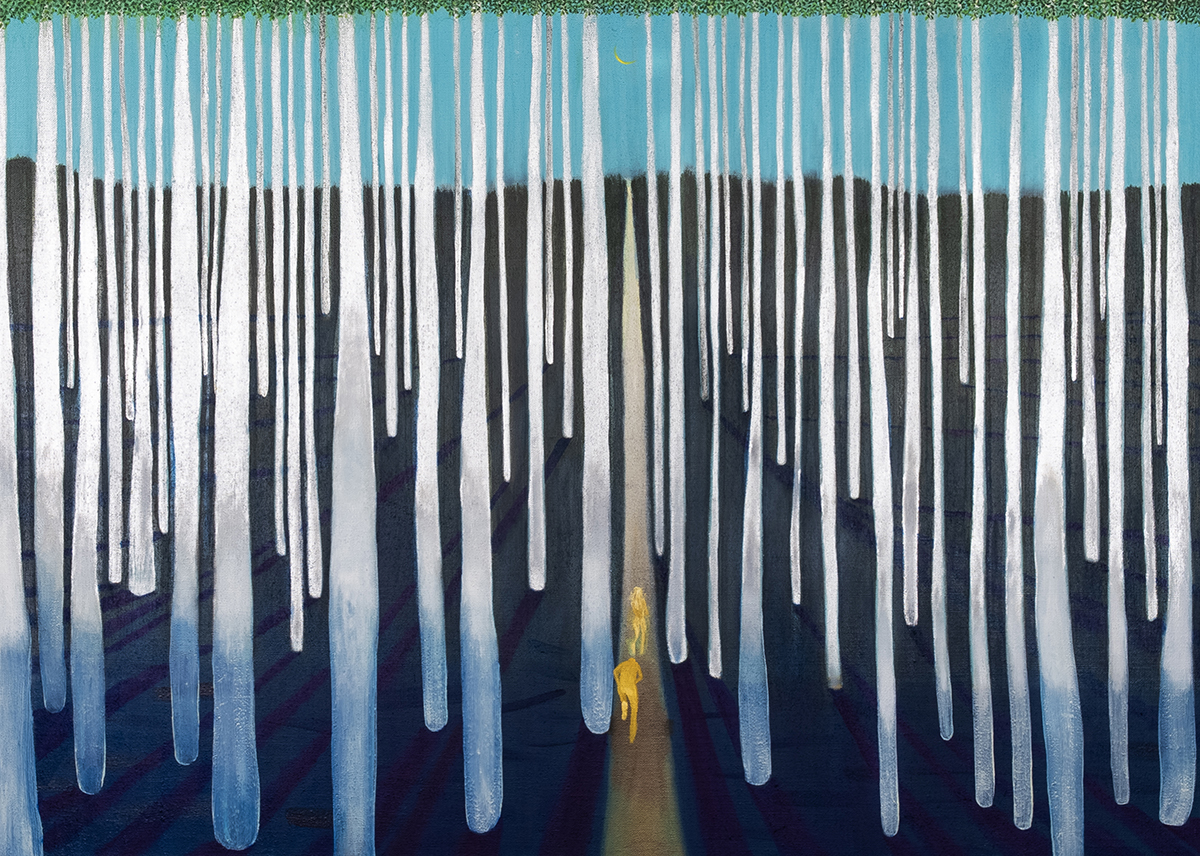
2. 윤영호 Youngho Yoon, 푸른 숲을 뛰어가는 남녀 A Man and Woman Running Through the Blue Forest, 캔버스에 먹과 유채 Oil and oriental ink on canvas, 72.7 x 100 cm, 2026
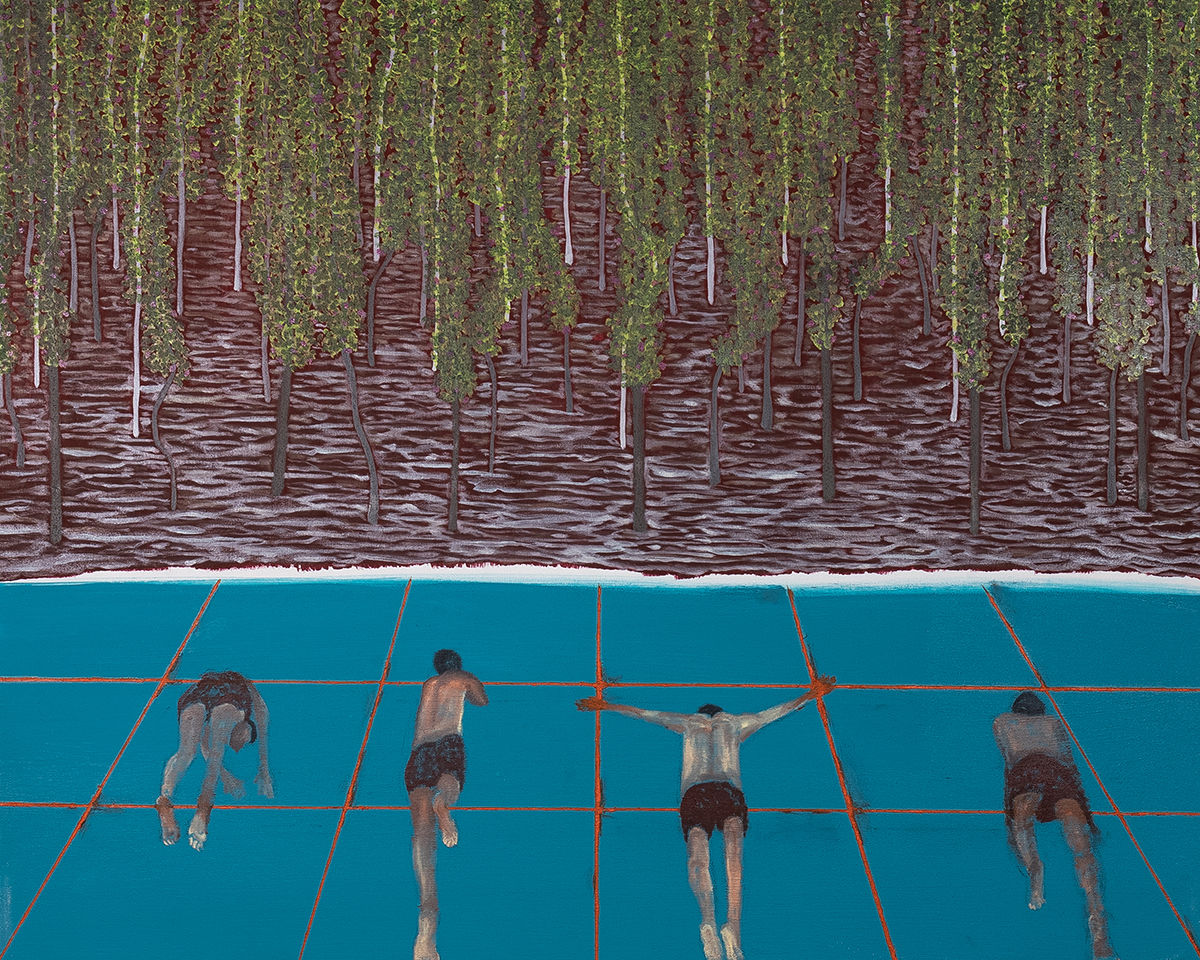
3. 윤영호 Youngho Yoon, 미지의 세계로 다이빙 Diving into the Unkown, 캔버스에 유채 Oil on canvas, 72.7 x 90.9 cm, 2025
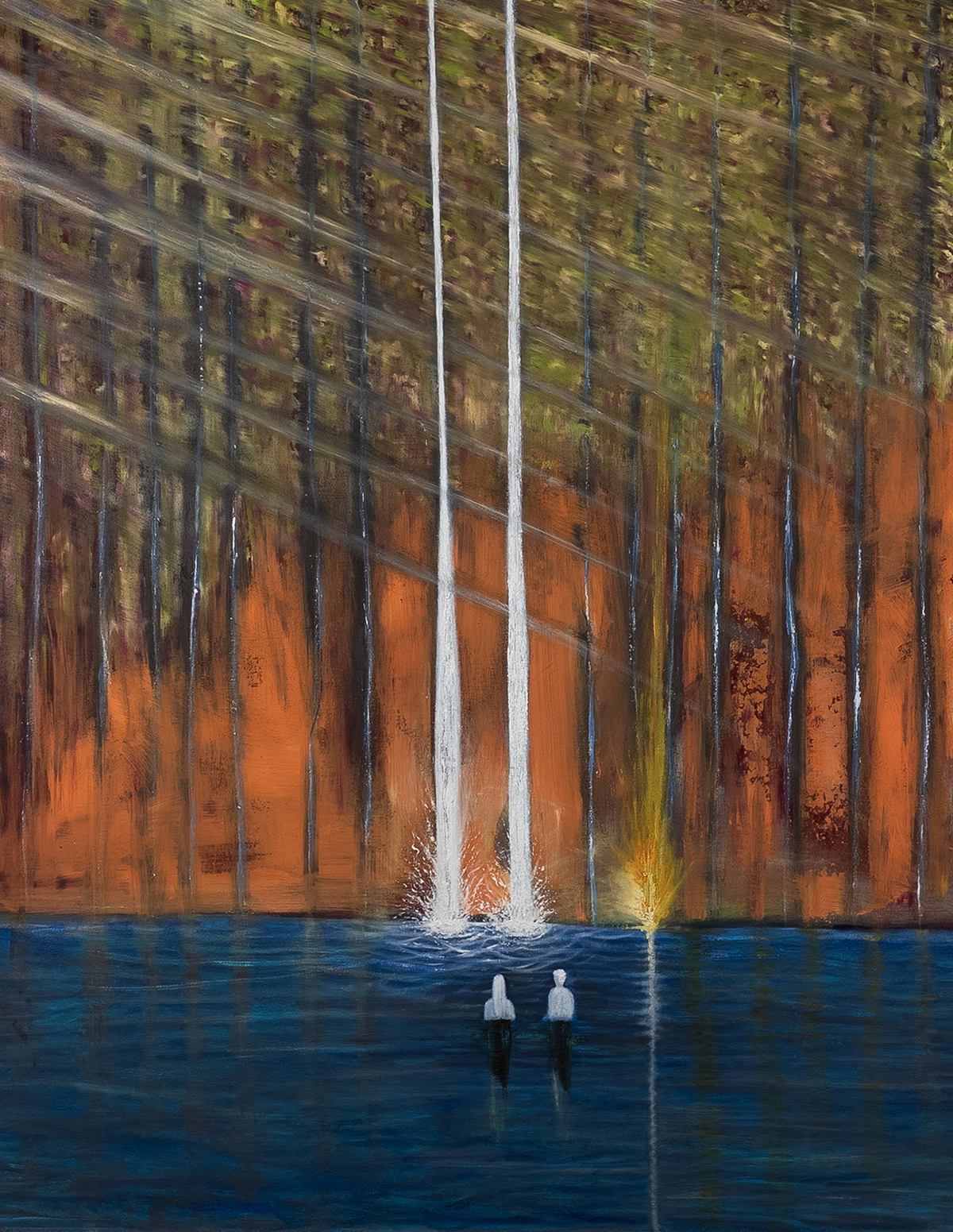
4. 윤영호 Youngho Yoon, 불타는 숲을 바라보는 남녀 A Man and Woman watching the Burning Forest, 캔버스에 유채 Oil on canvas, 116.8 x 91 cm, 2026
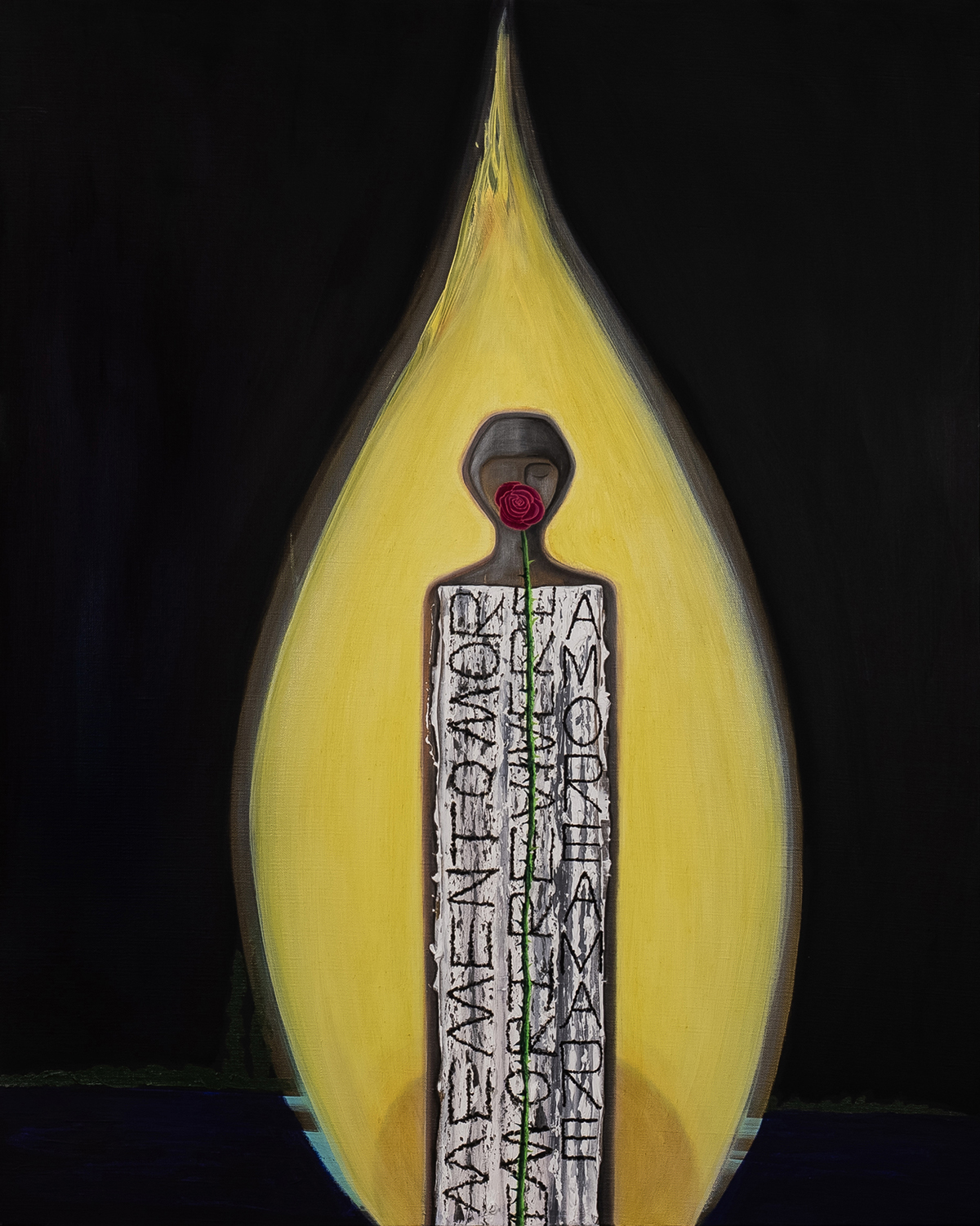
5. 윤영호 Youngho Yoon, 메멘토모리 Mementomori, 캔버스에 페이스트와 유채 Oil and paste on canvas, 100 x 80.3 cm, 2026
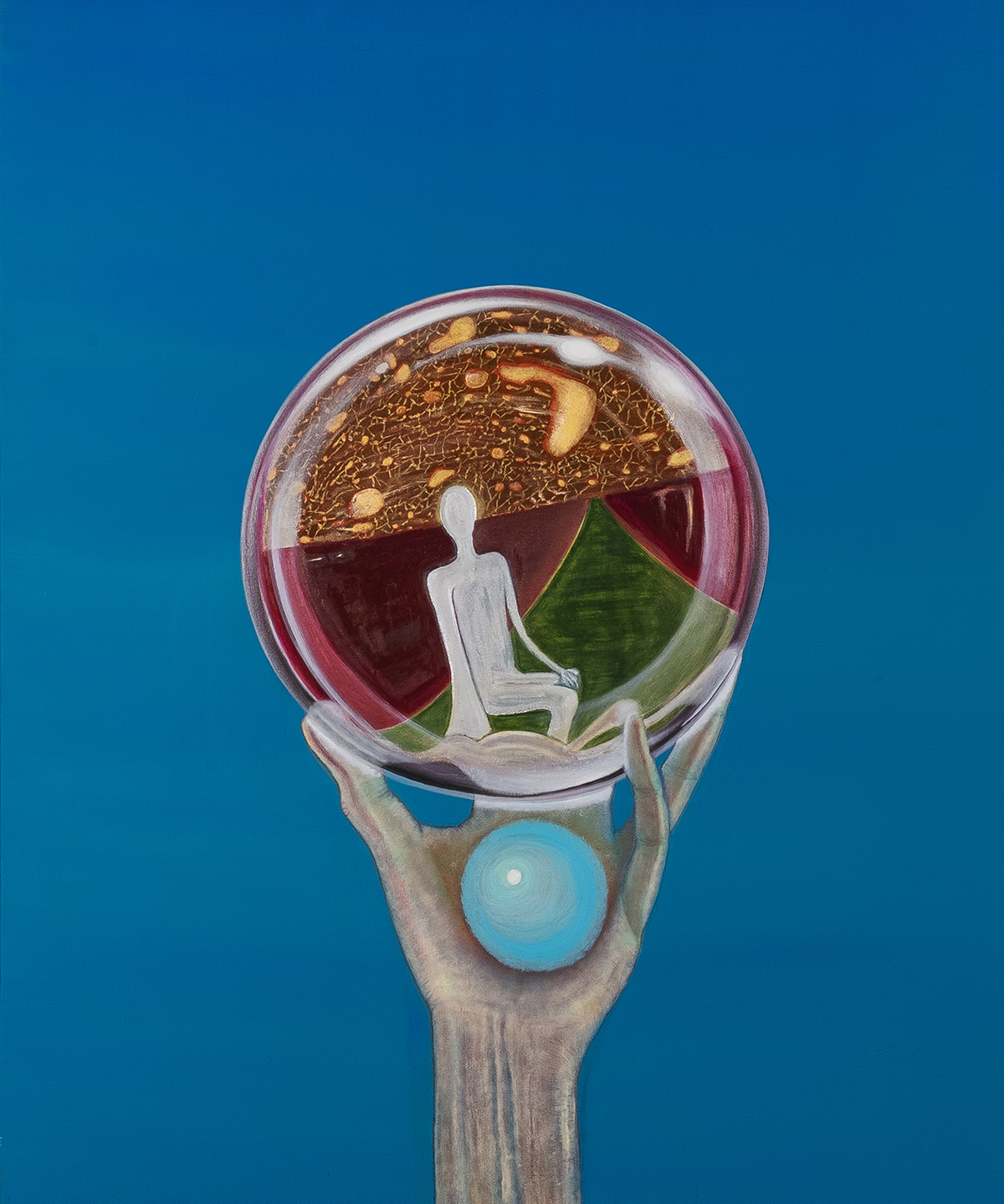
6. 윤영호 Youngho Yoon, 미래를 내다보는 유리구슬 Through the Crystal Ball, the Future, 캔버스에 먹과 유채 Oil and oriental ink on canvas, 72.7 x 60.6 cm, 2026
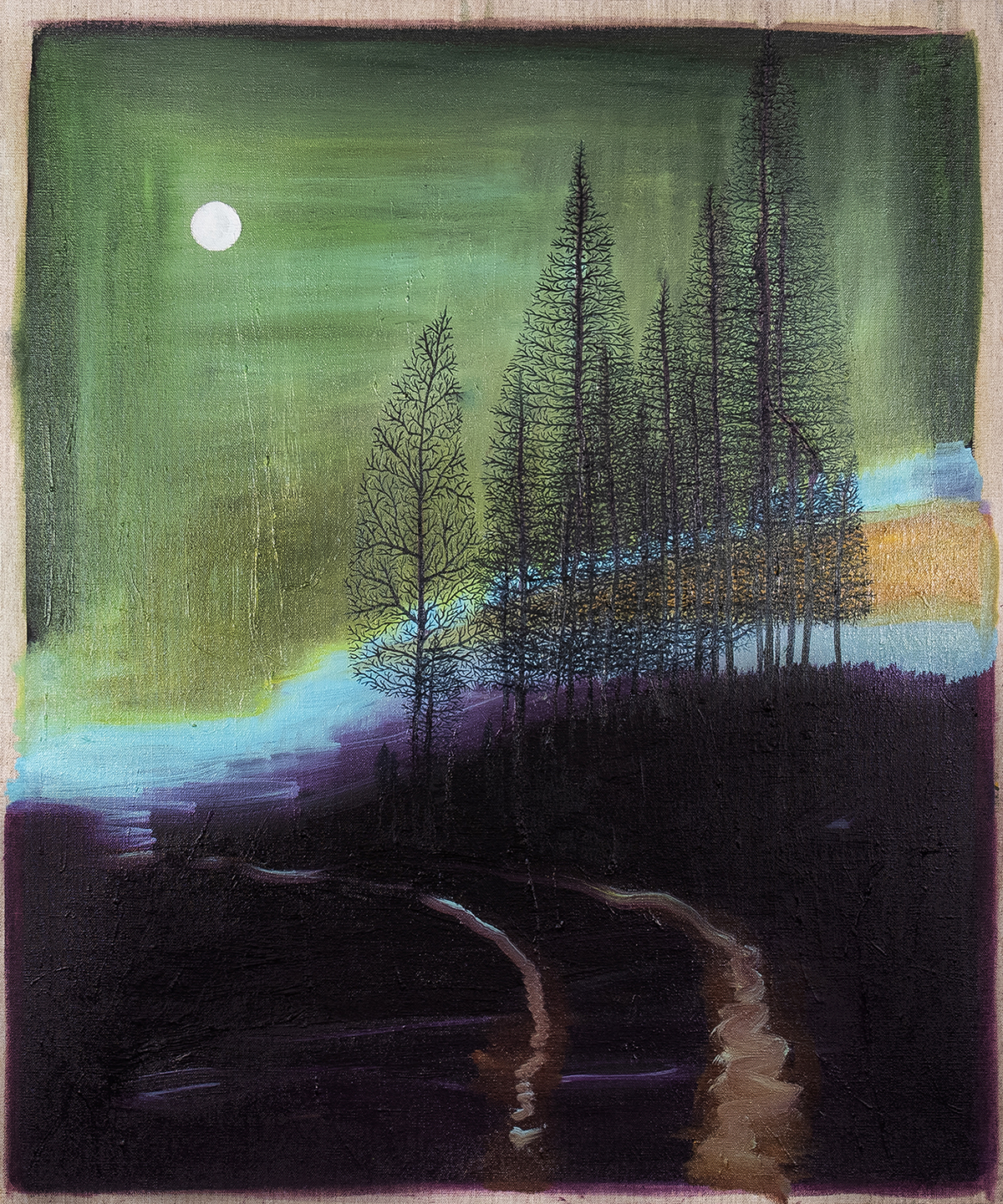
7. 윤영호 Youngho Yoon, 야행 Nocturnal Walk, 캔버스에 유채와 아크릴 Acrylic and oil on canvas, 72.7 x 60.6 cm, 2025
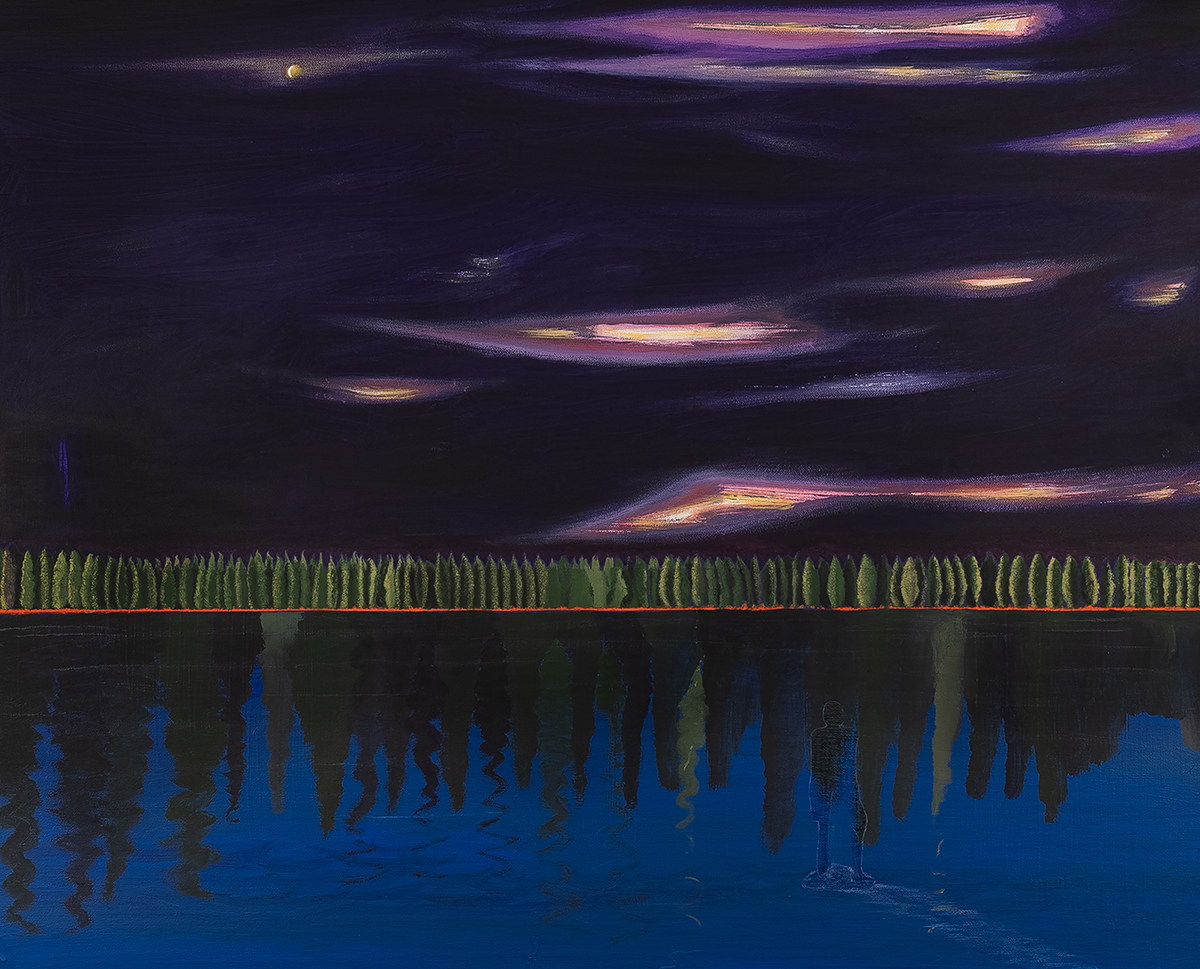
8. 윤영호 Youngho Yoon, 푸른 숲에 머물다 Lingering in the Blue Forest, 캔버스에 유채와 아크릴 Acrylic and oil on canvas, 60.6 x 72.7 cm, 2026
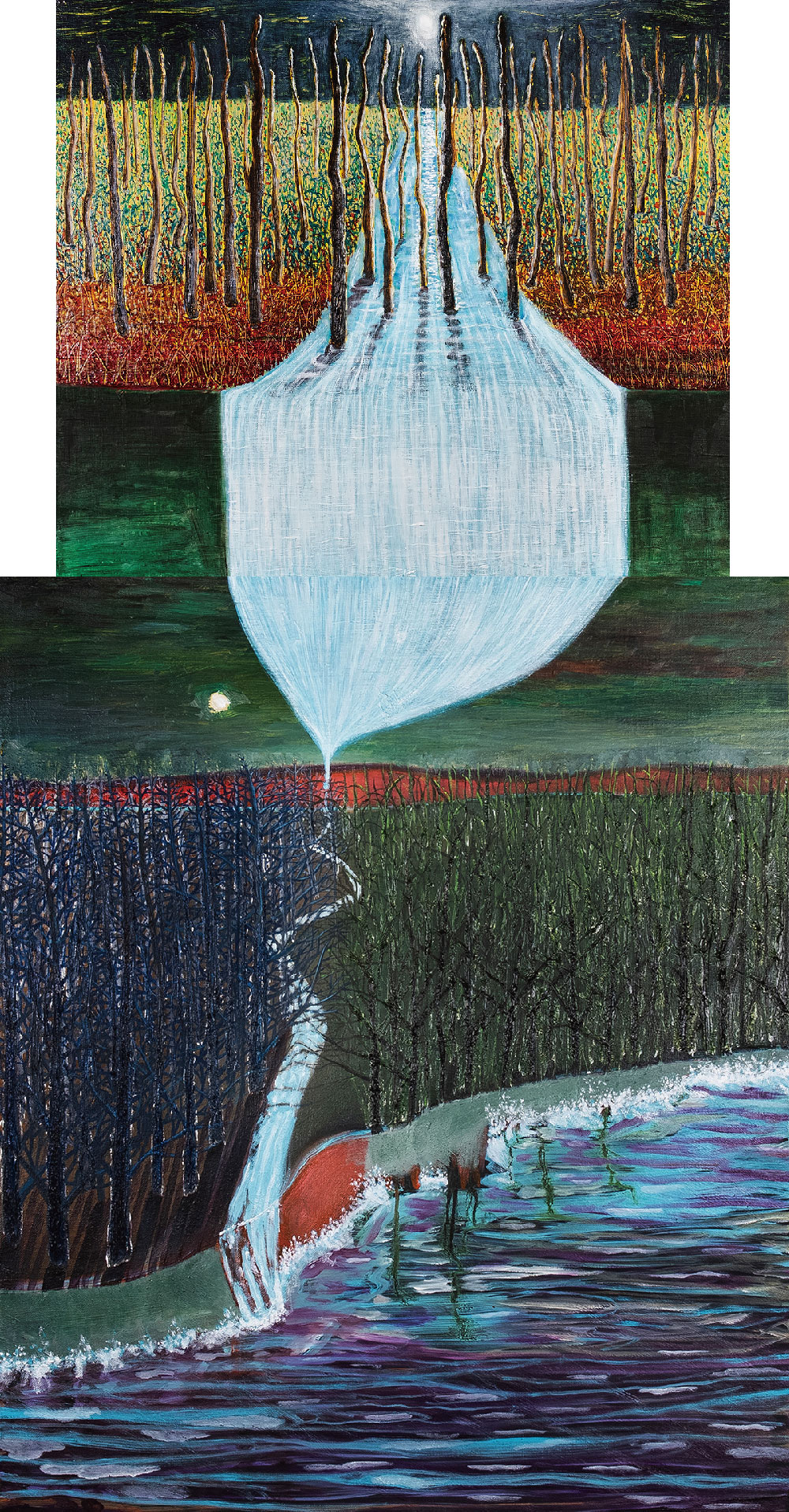
9. 윤영호 Youngho Yoon, 두 개의 달과 폭포 Two Moons and Waterfalls, 캔버스에 유채 Oil on canvas, 125.7 x 106 cm, 2026
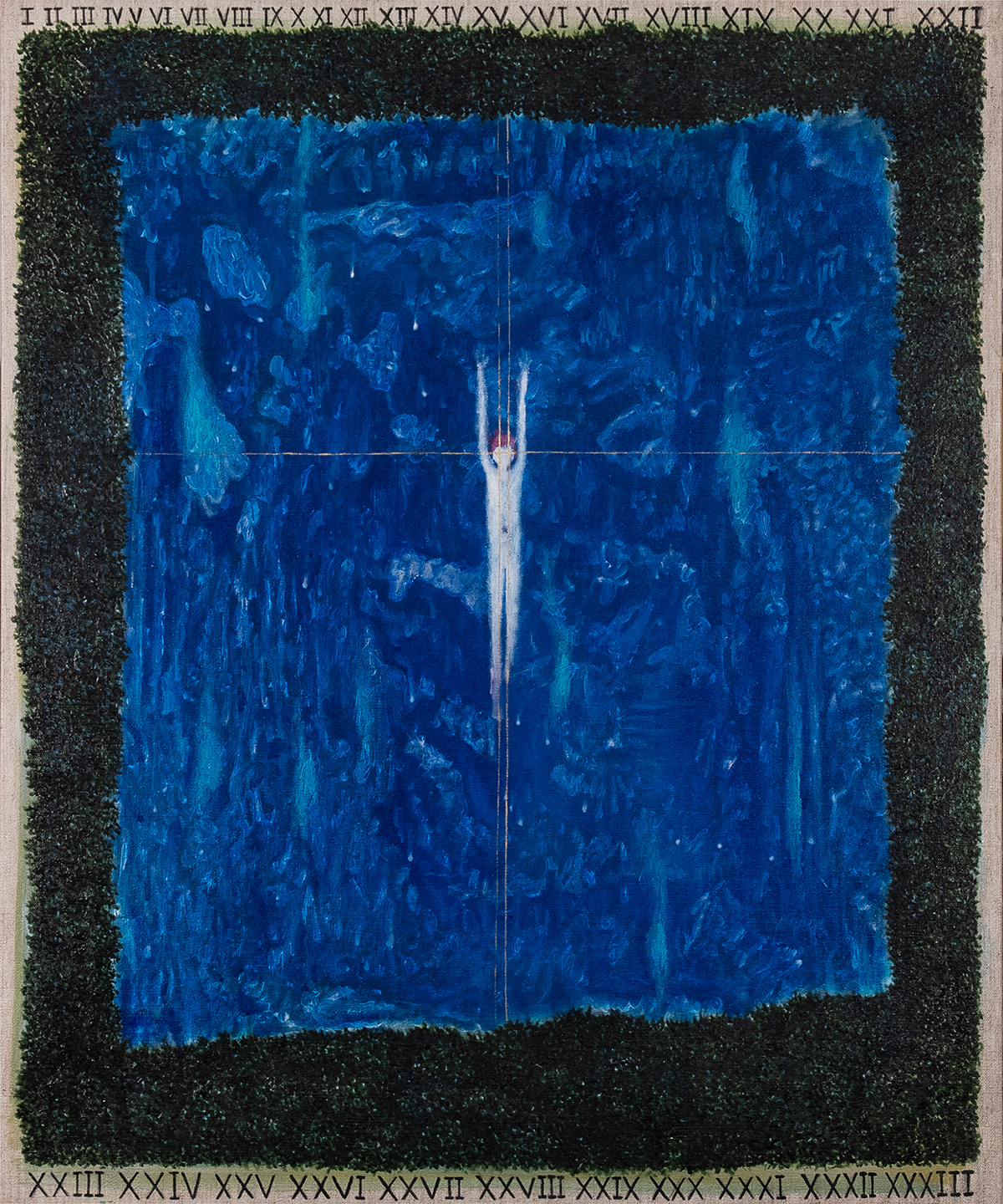
10. 윤영호 Youngho Yoon, 푸른 숲을 헤엄치다 Swimming in the Blue Forest, 캔버스에 유채 Oil on canvas, 72.7 x 60.6 cm, 2024
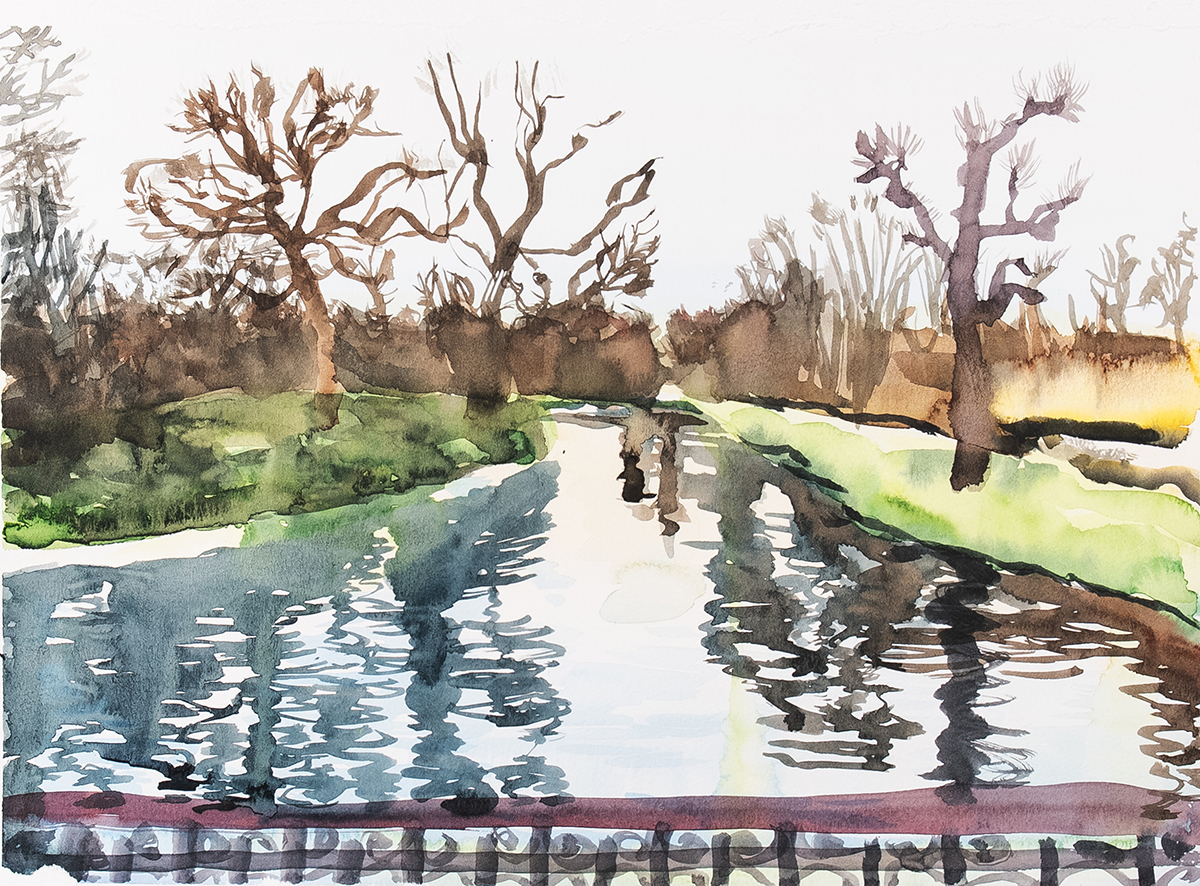
11. 윤영호 Youngho Yoon, 보팅 호수 Boating Lake, 종이에 수채 Watercolor on paper, 29 x 41.5 cm, 2026
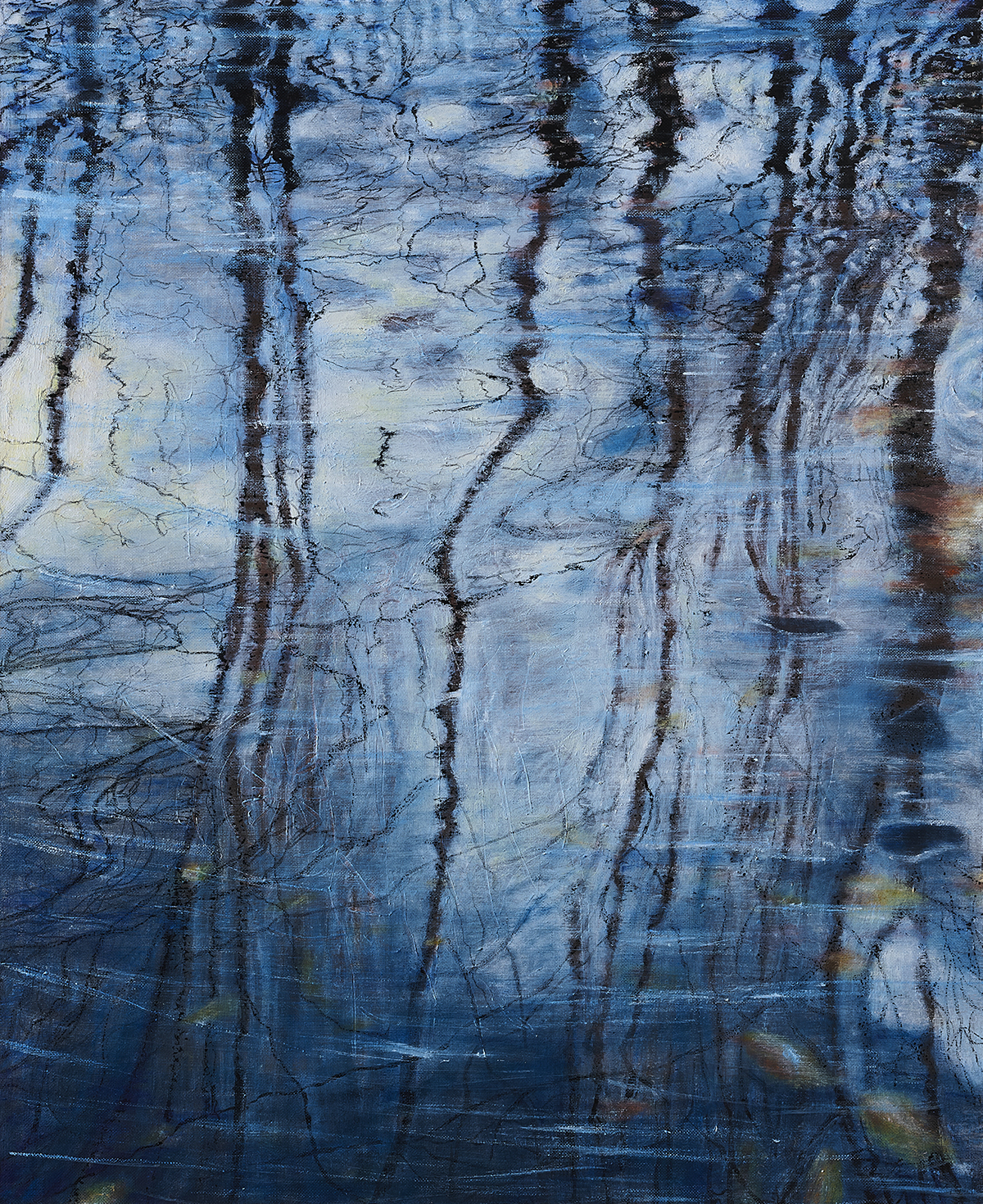
12. 윤영호 Youngho Yoon, 방랑자의 시선 The Wanderer's Gaze, 캔버스에 먹과 유채 Oil and oriental ink on canvas, 72.7 x 60.6 cm, 2025
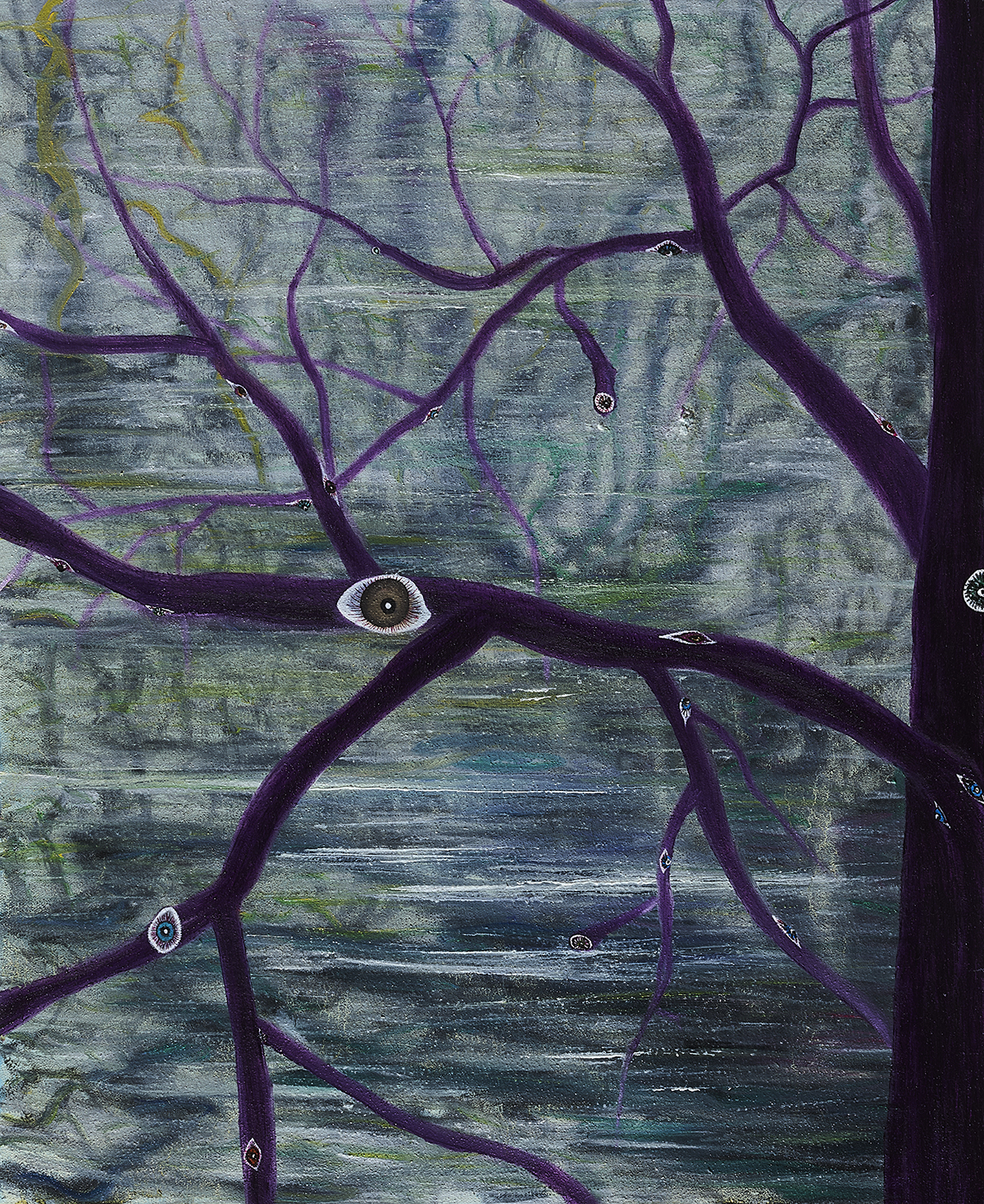
13. 윤영호 Youngho Yoon, 나무의 시선 The Gaze of Trees, 캔버스에 유채 Oil on canvas, 65.1 x 53 cm, 2025
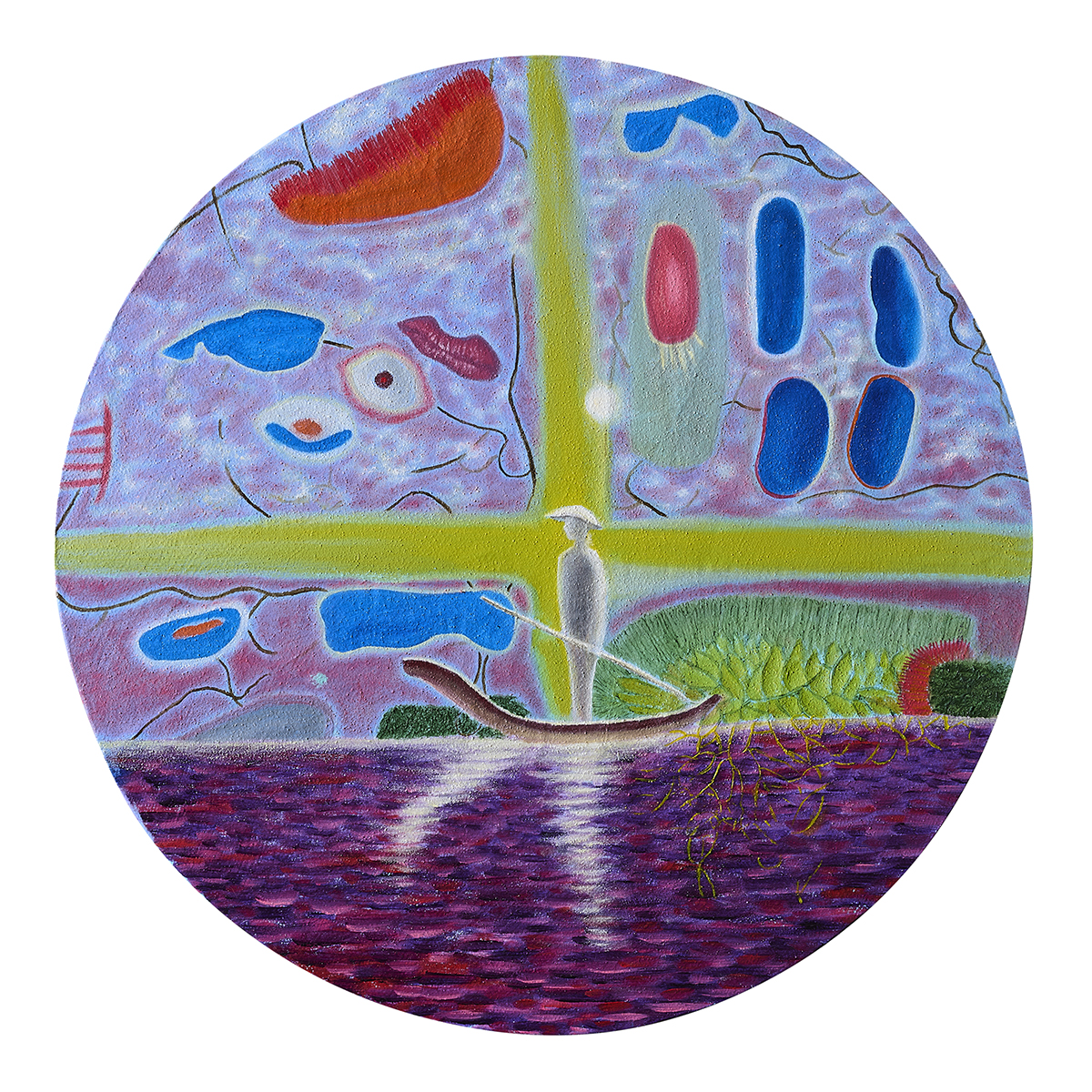
14. 윤영호 Youngho Yoon, 항해 Voyage, 캔버스에 유채 Oil on canvas, 45 x 45 cm, 2025
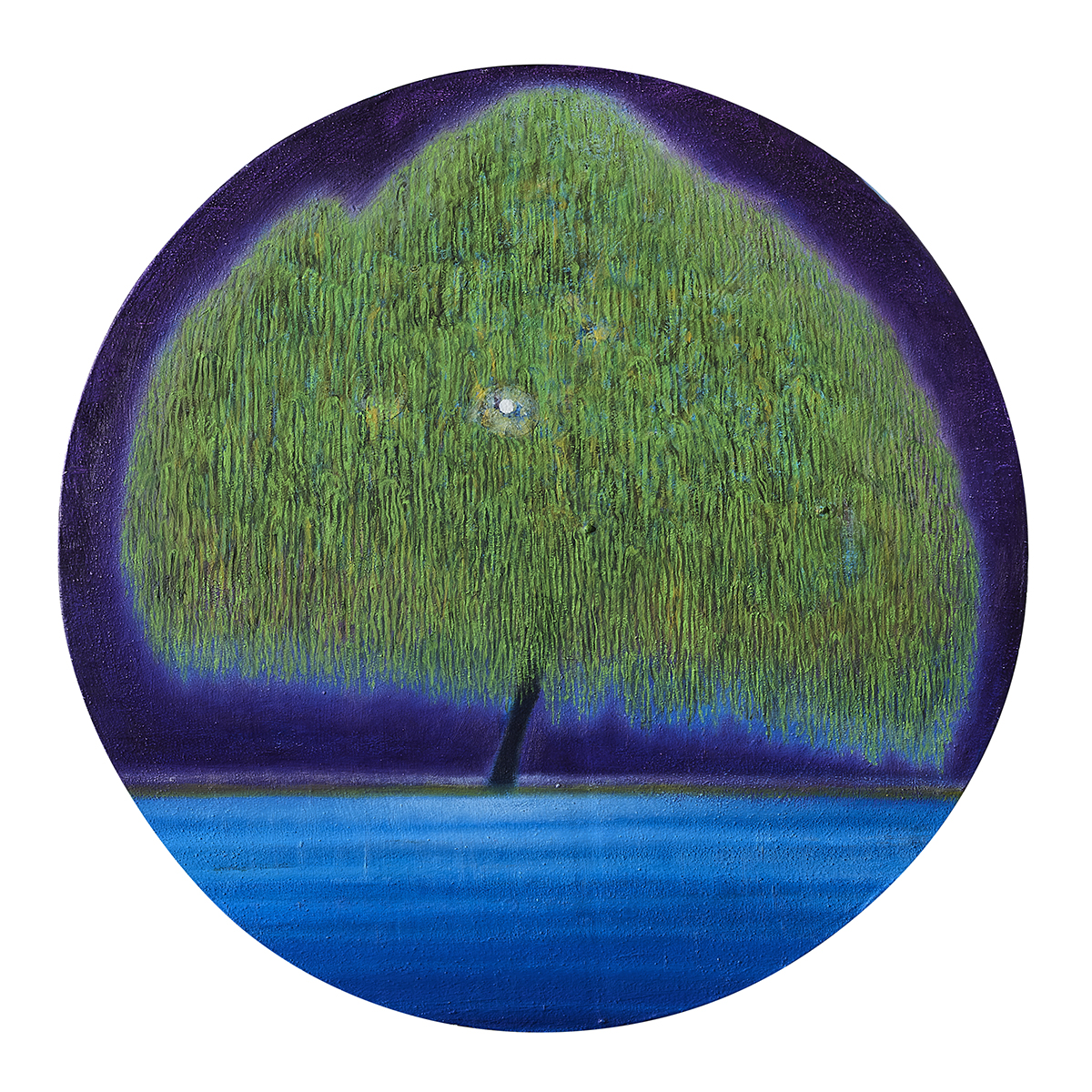
15. 윤영호 Youngho Yoon, 버드나무와의 조우 Encouter with the Willow Tree, 캔버스에 유채 Oil on canvas, 45 x 45 cm, 2025
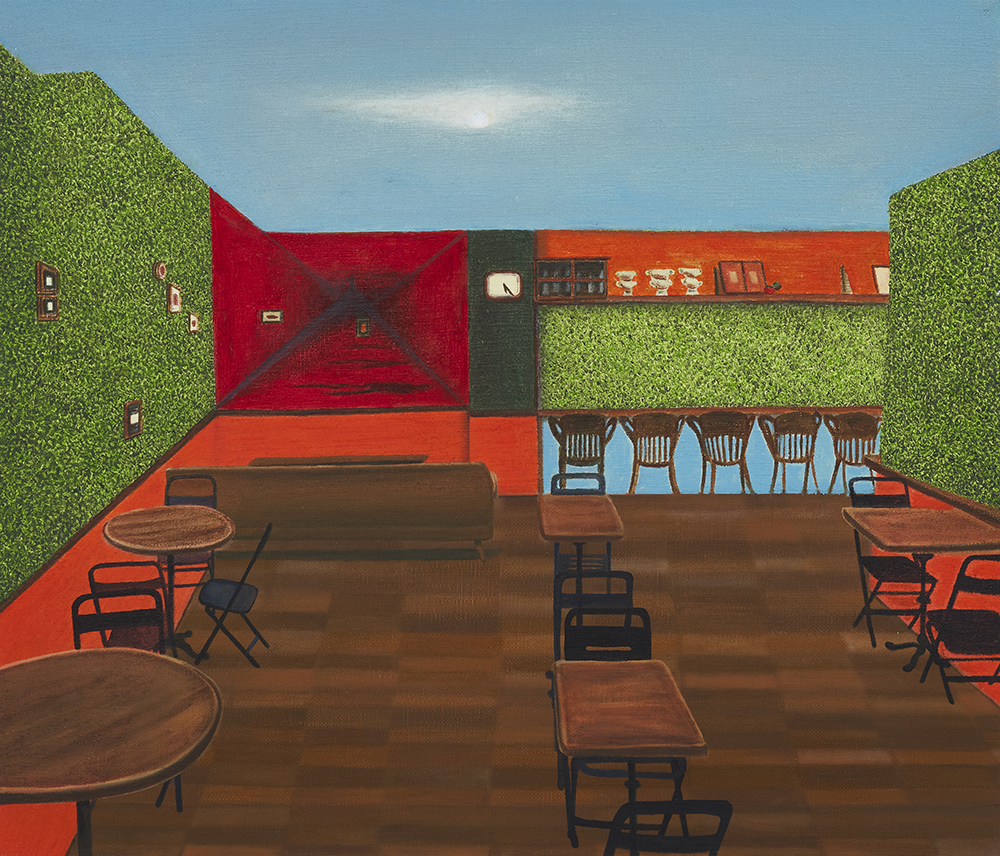
16. 윤영호 Youngho Yoon, 방랑자의 카페 The Wanderer's Caffe, 캔버스에 유채 Oil on canvas, 45.5 x 53.4 cm, 2025
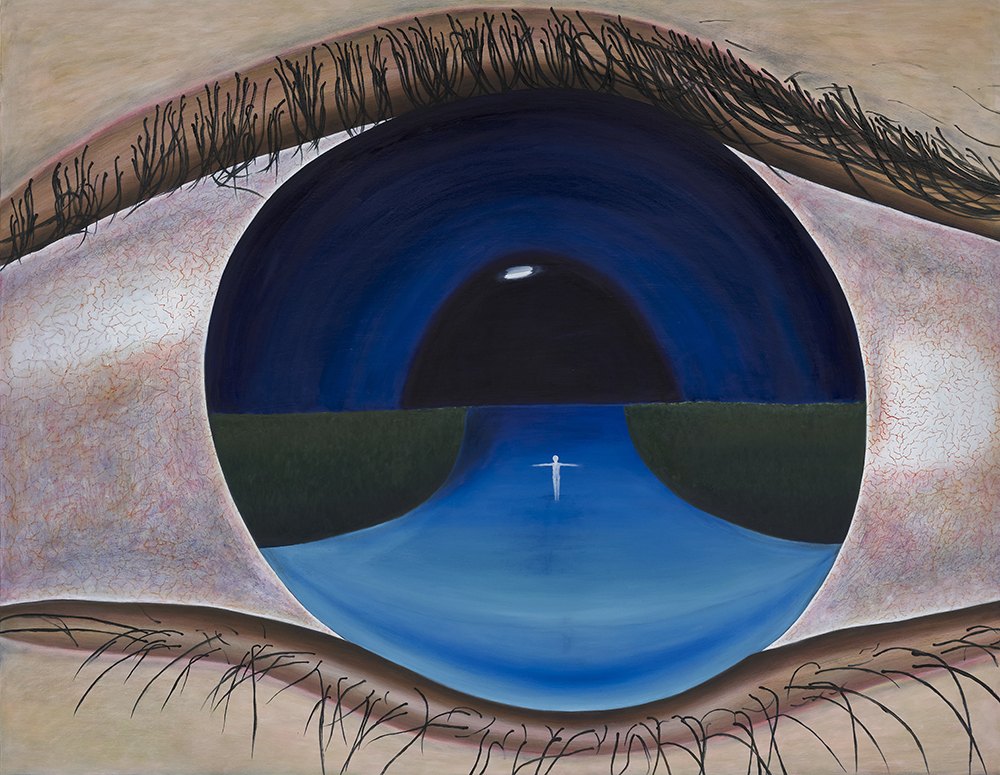
17. 윤영호 Youngho Yoon, 갈망하는 눈 Longing Eye, 캔버스에 먹과 유채 Oil and oriental ink on canvas, 91 x 116.8 cm, 2026
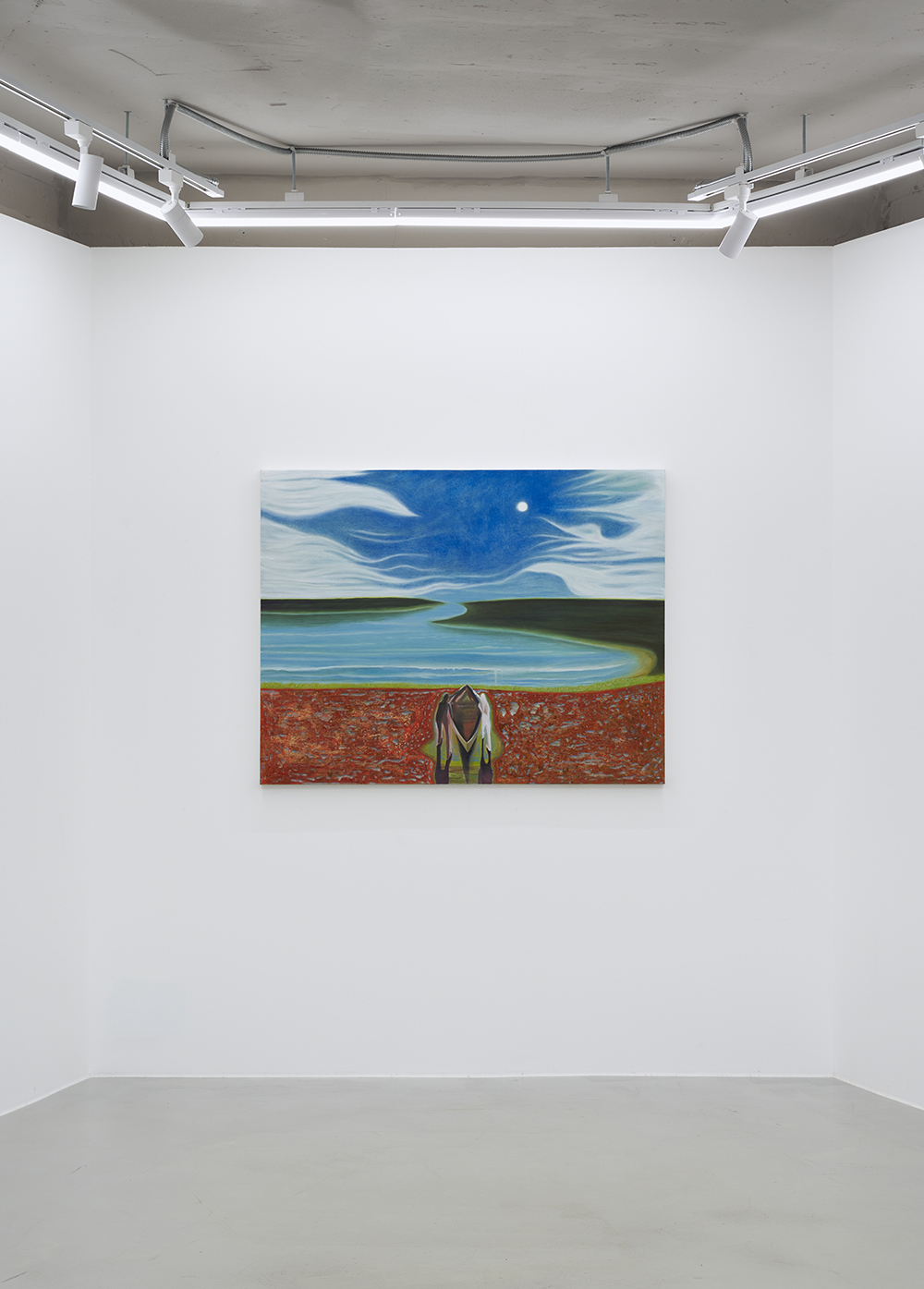
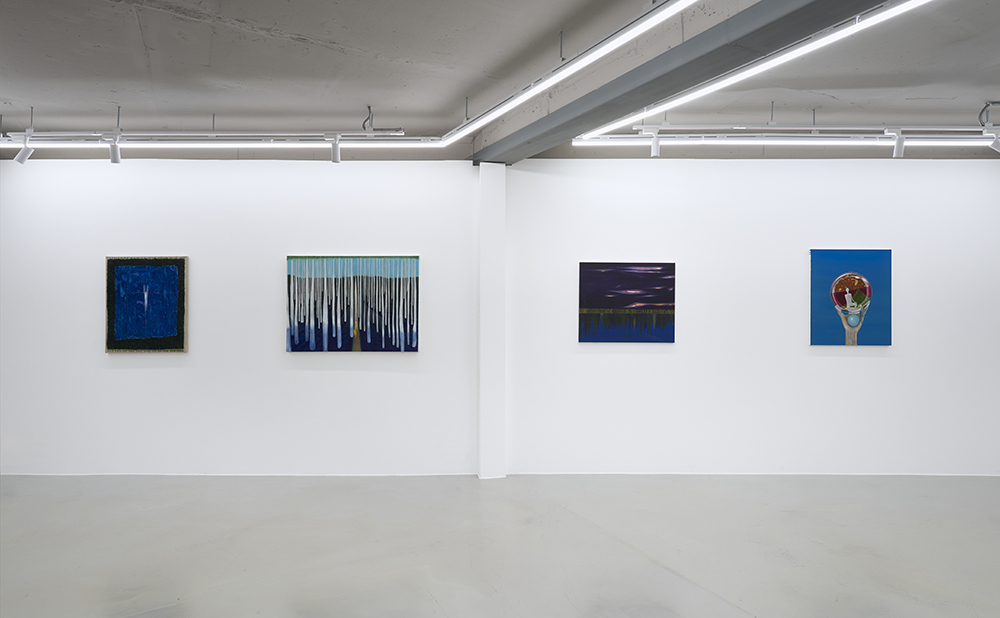
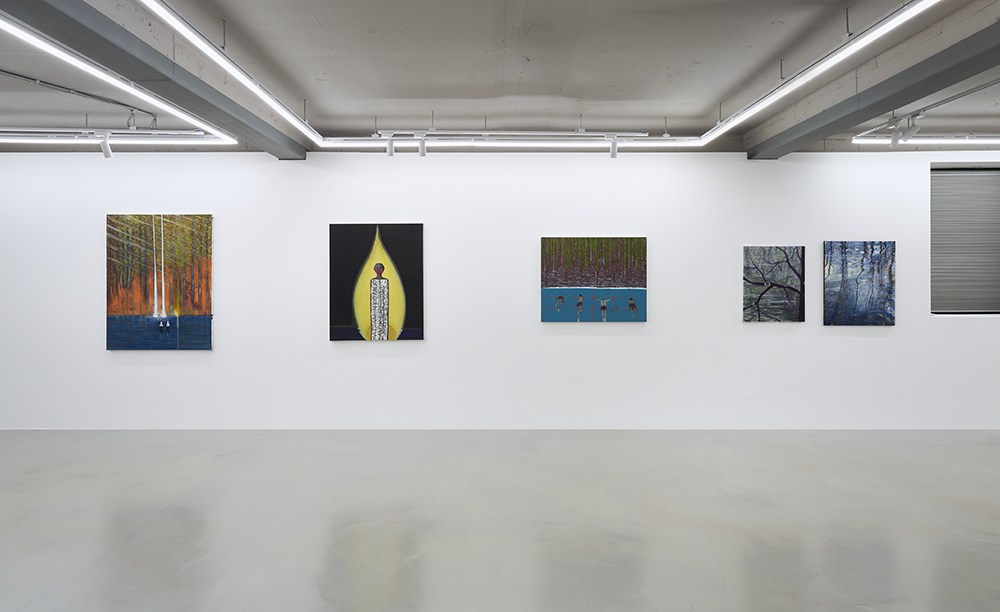
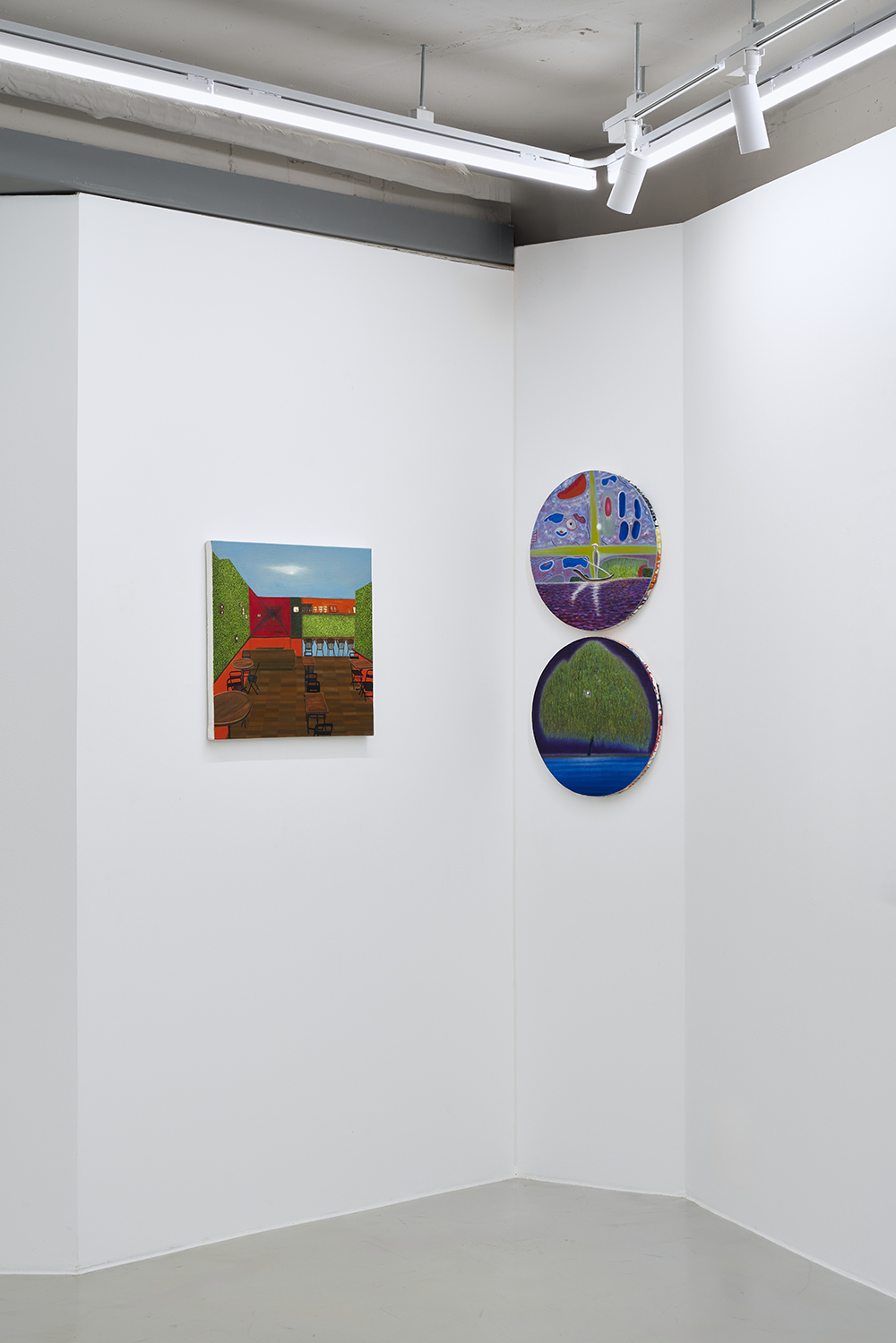
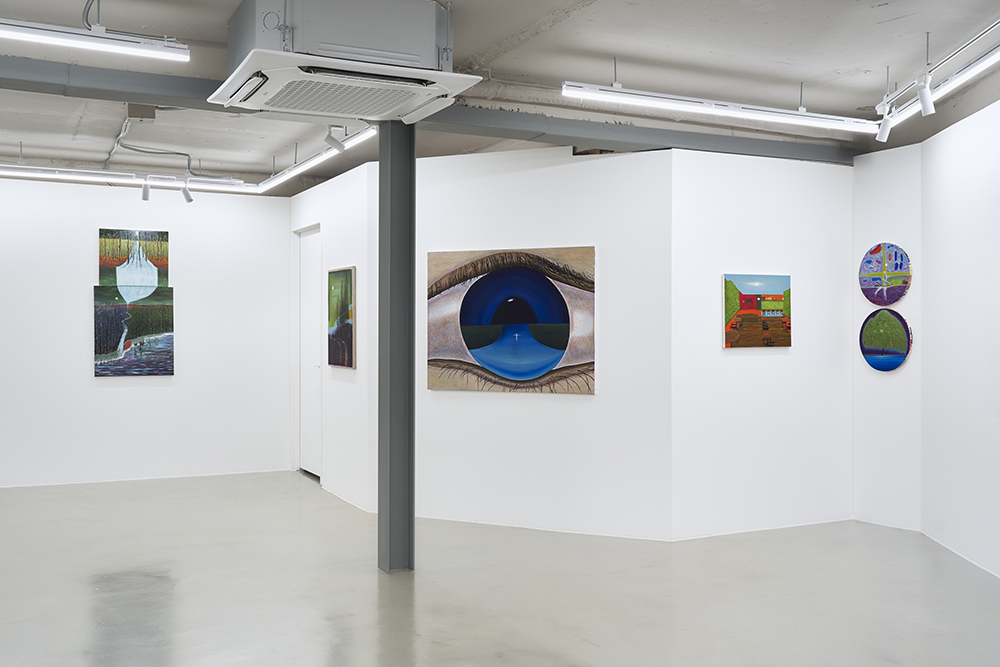
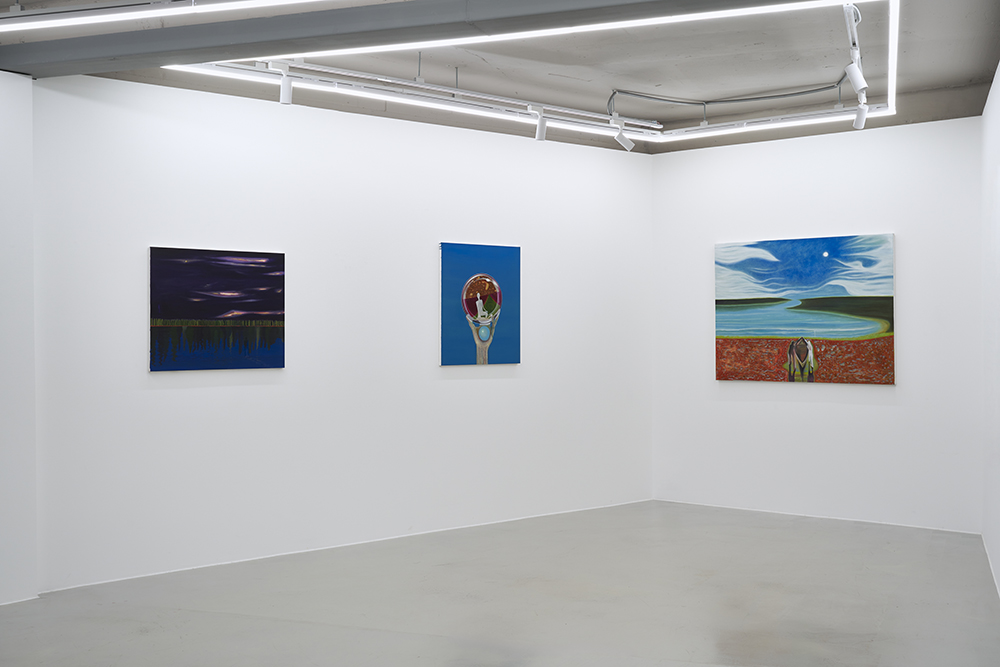
■ 전시 전경 (양이언)
■ 작가 약력
윤영호 Youngho Yoon
2020 홍익대학교 대학원 회화전공 박사 졸업
2016 Chelsea College of Arts 회화전공 석사 졸업
2013 Accademia di belle arti di Brera 회화전공 학사 졸업
개인전
2024 Pool = 숲 Blue Forest, 문래예술공장, 서울
2024 으스름달 Gloaming Moon, 경민현대미술관, 경기
2022 녹턴+사라지는것들 Nocturne + things disappearing, 빈칸을지로, 서울
2020 색깔유목민 Color Nomad, H contemporary gallery, 경기
2020 빨주노초파보 Hybrid Color, 갤러리더플로우, 서울
2019 이방인의 시각 Stranger's Vista, 홍익대학교 현대미술관, 서울
2018 특정장소에서 특정시간의 잔상 : 믿지 못한다 Afterimages in specific time and space, N646 gallery, 서울
단체전
2024 남해국제ESG예술제 Namhae International ESG Art festival, 독일마을 특별전시장, 남해
2022 Tradition/Transition UAL동문전시회, Puntoblu, 서울
2021 AHAF 아시아호텔아트페어 젊은작가특별전 Asia Hotel Art fair - the emerging artists, 나인트리프리미어호텔인사동, 서울
2021 아트울산2021 공존- live togheter 신진작가전 Art Ulsan 2021 Live togheter, 태화강국가정원 특별전시장, 울산
2020 Stanza-윤영호, 전진표 2인전, 갤러리툰, 춘천애니메이션박물관
2018 Fantastic Voyage, 홍익대학교 현대미술관, 서울
2017 Wall Flower, O Gallery, 서울
2017 Pittura, Gallery Onue, 서울
2016 Graduate Art & Design, Candid arts gallery, 런던
2016 Conversation in progress, mills centre gallery, 런던
2013 브레라 국립미술원 한인학생 그룹전 Via Arte Coreana 2013(La Casa delle Culture del Mondo(주밀라노총영사관 후원), 밀라노
2012 M.A.D -MODA, ARTE, DESIGN DEL FUTURO, Spazio Sagsa, 밀라노
2012 La notte itinerante(GRT-TS1C), 밀라노
2012 Via Arte Coreana 2012(La Casa delle culture del mondo, 밀라노
2011 Via Arte Coreana(spazio concept, 밀라노
2009 PLANNIG-HURT_CURE 2인전, 삼청갤러리, 서울




■ 전시 정보
▪ 전시 제목 : 우리는 푸른 숲을 향해 나아간다 Into the Blue Forest
▪ 참여 작가 : 윤영호 Youngho Yoon
▪ 전시 기간 : 2026년 10월 1일(목) ~ 10월 18일(일) *하루 연장된 전시 기간입니다.
▪ 아티스트 앤 토크 : 10월 10일 토요일 오후 3시 (이후 오프닝 리셉션이 이어집니다)
▪ 운영 시간 : 수요일 ~ 일요일 13:00 ~ 18:00/ 월, 화요일 휴무
( * 이번 전시는 특별히 일요일과 공유일에 정상 운영합니다 )
▪ 전시 장소 : 페이지룸8 (서울시 종로구 옥인길 18, 3층)
▪ 전시 장르 및 규모 : 회화 17점
▪ 주최 및 주관 : 페이지룸8
▪ 글 : 박정원
▪ 디자인 : 오렌지슬라이스타입
▪ 사진 : 양이언
▪ 후원 : 문화체육관광부, 한국문화예술위원회, 서울문화재단 K-Art 청년창작자지원사업
▪ 문의 : 02-732-3088/ pageroom8@naver.com
■ 전시 서문
미지의 세계로*
* 글 제목은 윤영호 작가의 작품 〈미지의 세계로〉에서 차용하였다
박정원 페이지룸8 디렉터
윤영호 작가는 현실과 맞닿은 채 작동하는 무의식 속 미지의 세계를 회화로 표현한다. 작가는 미지의 세계를 “푸른 숲”으로 명명하며 현실과 이상, 실체와 환영 그리고 보이는 것과 보이지 않는 것들이 교차하는 경계 지점에서 느끼는 감각을 이미지로 구현한다.
2013년 이탈리아 밀라노에서 학부를 졸업하고, 2016년 영국에서 석사 과정을 마친 윤영호 작가는 초기작에서 내면의 감정과 에너지를 추상적으로 표출하는 미술적 방법에 집중했다. 그러나 2020년경부터 작가가 고전 문학과 철학, 클래식 음악 등에서 받아들인 공감각적 소재들이 그의 화면을 구상으로 이끌었다. 이를테면 밤의속성에 영감을 받아 작곡한 쇼팽의 ‘녹턴(Nocturne)’은 윤영호 작가의 밤 풍경으로 재해석되었다. 이것이 그의 첫 구상 작업에 해당한다. 이후 윤영호 작가는 대기와 자연 그리고 천체 등 누구나 보고 있지만 인간적인 감정과 불안으로 인해 자각하기 어려운, 순수한 감각의 기원을 찾아 나선다. 이번에 소개되는 작품 17점을 제작 순서대로 살펴보면 작가가 가고자 했던 방향을 함께 따라갈 수 있을 것이다.
미술사의 서사에서 작가 개인의 작품 세계가 주로 구상에서 추상으로 변모하는 경우가 많다는 것을 알 수 있지만, 그와 반대로 윤영호 작가는 6년 전 추상에서 구상으로 전환점을 맞았다. 그 배경에는 ‘녹턴’이라는 곡이 있다. 한국으로 돌아와 이태원과 해방촌 등 실재하는 서울의 장소들이 밤의 시간과 맞물리면서, 음악으로부터 파생된 공감각이 형상을 얻을 수 있었다. 형상의 유무로 구상과 추상을 나누고 작업의 변곡점을 구분할 수 있지만, 사실 작가의 최근작에서 느낄 수 있는 강한 색채 대비와 서정적인 감수성은 초기 추상 회화에서도 엿볼 수 있다. 필자는 실체 없이 부유하던 감각이 형체를 지닌 대상에 투영되면서, 마침내 우리가 볼 수 있는 ‘미지의 세계’로 들어서기 시작했다고 생각한다. 이는 작가가 이번 전시의 모티프로 삼은 단테의 『신곡』이 지옥과 연옥, 천국의 경계를 넘어서며 인간적 갈등 끝에 진정한 자신을 찾는 서사로 엮여 있는 것과 같다. 유학을 마치고 귀국한 후 환경이 바뀌면서 작업의 주제 의식이 짙어지고 소재가 뚜렷해짐에 따라 제작 기법 역시 전환기를 맞았다. 그 시간을 거치며 캔버스에 묵묵히 그려 나간 형상이 켜켜이 쌓여 층위가 생긴 것이다. 작가는 이러한 상황을 무의식적으로 감지하고 여러 세기를 건너온 단테의 여정에 함께한다.
그 여정은 1년여간 그린 ‘방랑자의 시선’ 연작을 통해 가늠할 수 있다. 수면에 비친 나무 그림자가 1인칭 시점으로 그려지고, 어스름한 새벽이나 밤으로 보이는 푸른 풍경 속에 연달아 등장한다. 반면 시점이 전환되면서 자의식을 지닌 〈나무의 시선〉이 등장하기도 한다. 이후 ‘방랑자의 시선’은 수평선으로 나뉘는 실제 풍경과 그림자가 공존하는 수채화 〈보팅 호수〉로 이어진다. 마치 꿈에서 깨어나거나 공상에서 빠져나오는 듯한 감정은 〈푸른 숲에 머물다〉에 잠시 깃든다. 잔잔한 밤 풍경 오른쪽 한켠에 사람의 실루엣이 자리해 있어, 부재한 실체와 여전히 남은 기억이 공존한다. 작품의 제목처럼 작가가 그 풍경 속에 한동안 머물며 마주했을 잔상을 상상해 본다. 그 머문 시간은 시공을 초월해 환영과 실체가 경계 없이 오가는 중에도 끝내 남는 것을 향해 멈춰 선, 『신곡』의 연옥과 같은 시간이 아니었을까. 그렇게 미끄러지듯 제자리로 돌아오면, 그곳에 증표처럼 이미지가 남는다.
이러한 여정 끝에 작가의 화면에 자리한 푸른 숲은 불타거나 어둠에 휩싸인 채, 몸을 던져 건널 수 있는 저 너머의 공간으로 표현된다. 그리고 작가가 그 안에 작고 반짝이는 알레고리이자 메시지를 미술적 방법으로 다듬어 남길수록 푸른 숲은 점점 생생해진다. “우리는 푸른 숲을 향해 나아간다”라는 문구에서 전해지는 긍정적인 방향성은 이미지 자체에서도 비롯될 뿐 아니라 작가가 구현하는 표면 질감과 색채 그리고 화면 구성에서도 나온다.
한편 〈메멘토모리〉와 〈미래를 내다보는 유리구슬〉은 단테의 『신곡』 서사에서 한 걸음 물러나, 작품과 작품 사이를 잇는 내러티브에 쉼표를 찍어 전시의 흐름을 잠시 환기하는 역할을 한다. 〈두 개의 달과 폭포〉는 캔버스 두 개를 다른 차원에 존재하는 세상으로 상정해 결합한 작품이다. 천국의 첫 번째 하늘이 달의 하늘이라는 『신곡』의 모티프를, 두 개의 하늘에 뜬 달로 변주하고, 이를 두 세계를 잇는 폭포와 강의 물길로 풀어낸다. 이때 두 세계는 각각 천국과 연옥을 상징한다. 푸른 주조색은 작품마다 채도를 달리하지만, 하늘과 물 그리고 배경 등에 사용되면서 개별 작품들이 ‘푸른 숲’과 유기적으로 연결되도록 한다.
작가는 유화 물감과 아크릴 물감, 먹, 페이스트 등을 활용해 표면의 질감과 색채를 만들고, 상상 속 풍경의 시간대와 그림자를 구현한다. 이러한 표면 처리 방식은 작품에 대한 몰입을 배가한다. 〈불타는 숲을 바라보는 남녀〉에서 불과 대비되는 하얀 두 줄기 폭포, 〈푸른 숲을 뛰어가는 남녀〉에서 펄감을 더해 표현한 초승달의 미세하고 은은한 빛, 마침내 열린 듯 탁 트인 하늘과 굴곡진 대지가 대비되는 〈미지의 세계〉의 요철과 노이즈가 그 예이다.
『신곡』의 지옥편 첫 장면은 단테가 인생의 한가운데에서 길을 잃고 어두운 숲 속에 서 있는 자신을 발견하면서 시작된다. 반면 연옥편에서 지상 낙원의 신성한 숲은 울창하고 푸르며 새소리와 바람 소리가 가득한 곳으로 묘사되고, 어두운 숲과 대비된다. 푸른 숲이 이렇게 상반된 모습으로 그려지는 상징이기에, 윤영호 작가의 푸른 숲은 유토피아이기보다는 푸코가 말한 헤테로토피아, 즉 현실에 존재하면서도 현실과 다른 질서로 작동하는 공간에 가깝다.
어둠과 빛이 혼재하는 〈녹턴〉은 마치 폭풍전야처럼 작가의 푸른 숲에 대한 서막을 알리는 것과 다름없다. 단테의 『신곡』을 통해 윤영호 작가는 예술에 대한 신념과 삶에 대한 태도, 그리고 그 사이에서 균형감을 되찾으려는 의지를 넌지시 내비친다. 작가가 제안하는 ‘푸른 숲’은 길을 잃은 방랑자의 숲이자 안내자 베르길리우스의 숲이며, 자신이 어디에 있는지 모르는 이를 위한 숲이다.
Into the Unknown*
*The title of this essay is borrowed from Yoon Young-ho's work 'Into the Unknown'.
Park Jung-won, Director, Pageroom8
Yoon Young-ho paints an unknown world: a realm of the unconscious that operates while remaining in contact with reality. The artist calls this unknown world the "Blue Forest": a place where reality meets the ideal, substance meets illusion, and the visible meets the invisible. His paintings give form to the sensations that arise at these points of intersection.
Yoon completed his undergraduate studies in Milan, Italy, in 2013 and his master's degree in the United Kingdom in 2016. His early work focused on expressing inner emotion and energy through abstraction. Around 2020, however, synesthetic material he drew from classical literature, philosophy, and classical music began to lead his canvases toward figuration. Chopin's Nocturnes, composed in response to the nature of night, were reinterpreted as Yoon's own nocturnal landscapes. These became his first figurative works. He then set out to find the origins of pure sensation in the atmosphere, nature, and the celestial bodies. These are things everyone sees but few truly perceive, because human emotion and anxiety get in the way. Viewed in the order in which they were made, the seventeen works in this exhibition let us follow the direction the artist has sought to take.
In art history, an artist's practice more often moves from figuration toward abstraction. Yoon, by contrast, reached his turning point six years ago, moving from abstraction to figuration. Behind this shift lies the Nocturne. After his return to Korea, real places in Seoul such as Itaewon and Haebangchon became bound up with the hours of night. Through that connection, the synesthesia born of music was able to take on form.
One might separate figuration from abstraction, and mark the turning points of a practice, by the presence or absence of form. Yet the strong chromatic contrasts and lyrical sensibility of the artist's recent work can already be glimpsed in his early abstract paintings. In my view, sensations that once drifted without substance were projected onto tangible subjects. Through that projection, they finally began to enter an "unknown world" that we, too, can see. This parallels Dante's Divine Comedy, the motif of this exhibition, in which the poet crosses the boundaries of Hell, Purgatory, and Paradise and, through human struggle, finds his true self.
After completing his studies abroad and returning home, the artist's surroundings changed. His thematic concerns deepened and his subject matter grew more distinct, and his techniques reached a turning point as well. Over that period, the forms he patiently built up on canvas accumulated into layers. The artist sensed this unconsciously and joined Dante on a journey that has crossed many centuries.
That journey can be traced through the Wanderer's Gaze series, painted over roughly a year. Reflections of trees on the surface of water are rendered from a first-person perspective. They appear one after another in blue landscapes that seem to belong to dim dawn or night. Elsewhere the viewpoint shifts, and a self-aware The Tree's Gaze emerges. The Wanderer's Gaze then continues into the watercolor Boating Lake, in which a real landscape divided by the horizon coexists with its shadow.
A feeling akin to waking from a dream or stepping out of a reverie briefly settles in Lingering in the Blue Forest. A human silhouette occupies one corner on the right of the tranquil night scene, so that an absent presence and a lingering memory coexist. As the title suggests, we can imagine the afterimages the artist must have encountered while he remained in that landscape for a time. Perhaps that interval was like Dante's Purgatory. It is a time beyond time and space, in which illusion and substance pass freely back and forth, and yet it comes to rest before what ultimately remains. And when one slips quietly back to where one began, an image is left behind, like a token.
At the end of this journey, the Blue Forest that occupies the artist's canvases appears burning or shrouded in darkness. It is a space beyond, one that can be crossed only by casting oneself into it. The more carefully the artist refines and leaves within it small, glimmering allegories and messages through painterly means, the more vivid the Blue Forest becomes. The positive sense of direction in the phrase "We move toward the Blue Forest" comes from the imagery itself. It also comes from the surface textures, colors, and compositions the artist creates.
Meanwhile, Memento Mori and The Glass Orb That Sees the Future step back from the narrative of the Divine Comedy. They act as a pause in the narrative linking one work to the next, briefly refreshing the flow of the exhibition. Two Moons and a Waterfall joins two canvases, each conceived as a world existing in a different dimension. It varies the Divine Comedy's motif that the first heaven of Paradise is the Heaven of the Moon by placing a moon in each of two skies. It then unfolds this as the course of a waterfall and a river that connect the two worlds, which symbolize Paradise and Purgatory respectively. The dominant blue changes in saturation from work to work. Used in skies, water, and backgrounds, it binds the individual works organically to the "Blue Forest."
The artist uses oil paint, acrylic, ink, and paste to build surface texture and color, and to render the times of day and the shadows of imagined landscapes. These surface treatments deepen the viewer's immersion. Examples include:
-the two white streams of a waterfall set against the fire in A Man and a Woman Watching the Burning Forest
-the subtle, delicate glow of a crescent moon, rendered with added pearlescence, in A Man and a Woman Running Through the Blue Forest
-the relief and noise of The Unknown World, where a sky that seems finally to open wide contrasts with undulating land
The Inferno of the Divine Comedy opens with Dante finding himself lost in a dark wood, midway through the journey of his life. In the Purgatorio, by contrast, the sacred forest of the Earthly Paradise is described as lush and green, filled with birdsong and the sound of the wind, in contrast to the dark wood. Because the forest is a symbol depicted in such opposing ways, Yoon's Blue Forest is closer to Foucault's heterotopia than to a utopia. It is a space that exists within reality yet operates by an order different from it.
Nocturne, in which darkness and light intermingle, is nothing less than the prelude to the artist's Blue Forest, like the calm before a storm. Through Dante's Divine Comedy, Yoon quietly reveals his convictions about art, his attitude toward life, and his will to regain a sense of balance between the two. The "Blue Forest" he proposes is the forest of the lost wanderer and the forest of Virgil the guide. It is a forest for anyone who does not know where they are.
■ 작가 노트
윤영호, 2026
Artist statement
“The Blue Forest exists nowhere but here. It is a place the artist has built from memory, longing, and color — a landscape we walk toward not with our feet, but with our gaze.”
My work holds questions and reflections on human existence as it moves toward the unknown.
What lies beyond the present is a dark, unseen world, and so we feel incomplete. We often speak of the future as an invisible realm. Yet we can anticipate it through experience and make it visible through imagination. At the opening of Dante's Divine Comedy comes a confession: "In the middle of the journey of our life, I lost the right path and found myself in a dark forest." This confession reaches beyond the medieval cosmology. It is a portrait of universal humanity, discovering oneself within the passage of time and wandering between desire and reason. I have reinterpreted this classical narrative in a contemporary visual language, bringing an unknown world, the "Blue Forest," into my work.
The forest is a time-space of many diverse layers. It is an unexplored terrain of the unconscious, a place of natural drives beyond human control, and a primal space where healing and fear dwell together. Just as Dante looked at himself and his life through Virgil's guidance, I look at myself and my life through the world rendered on canvas. The canvas becomes a mirror in which both the viewer and I gaze into our own inner selves. It holds images that make the invisible visible and transform anxiety into hope.
The Blue Forest is an unknown world that leads toward hope. What, ultimately, do I want to say through the Blue Forest? As I have said, the first word that comes to mind is "hope." It is so universal that it may sound like a cliché. But when I add the dimension of perspective, of where and how one looks, another word joins it: "future."
Looking back on my earlier work, whether the abstractions or the Nocturne series, I worked by recalling the past and revisiting particular places and moments. The Blue Forest series, by contrast, carries within it an eye that looks toward the future. If my earlier works gazed backward, the images of the Blue Forest are in the present progressive tense, revealing an unknown world as it unfolds. An image does not fall into the past simply because it is finished. It keeps moving forward, slowly, and finds rest within ever-changing nature.
For me, the moon is a comforter.
At some point, I fell into the habit of looking up at the sky for the moon whenever I stepped outside on my way home. I think I was searching for something to console me for the day. Walking beneath the moon, I felt as though I were speaking with God. In the act of looking up at it, I feel that God is gazing back at me. For me, the moon is the sky itself, a spiritual presence. Its halo embraces us the way arms wrap around someone in a hug.
As an artist, I regard life as an object of inquiry. I reflect on how we perceive in order to exist and on the phenomena through which perception takes place. I then question the role of the forms in which this is expressed. I focus on the phenomena and disturbances that arise when we, as beings, encounter the external world. I observe and record the many ways people respond when they come into contact with what lies outside them: nature, environment, society, and relationships.
Material wealth and power can guarantee our freedom, or they can come to govern our lives. Events born of relationships bring mental and inner shock, which surface in isolated states of anxiety, depression, and lethargy. We are tormented by invisible emotions that arise from the world outside us. To escape them, people come to believe in what cannot be seen and to follow it. I visualize this act of belief and the people who follow.
Rather than reproducing schematic images, I create paintings by connecting the afterimages embedded in the subconscious to inner imagery. For me, time is like flowing water. We stand upon it, sometimes calmly, sometimes precariously. We can never go against its current, which is ever-changing and ever-moving.
Through painted images, I want to speak about how we ought to exist.
The act of living…
(Yoon Youngho)
■ 작품 이미지
1. 윤영호 Youngho Yoon, 미지의 세계로 Into the Unknown, 캔버스에 먹과 유채 Oil and oriental ink on canvas, 91 x 116.8 cm, 2026
2. 윤영호 Youngho Yoon, 푸른 숲을 뛰어가는 남녀 A Man and Woman Running Through the Blue Forest, 캔버스에 먹과 유채 Oil and oriental ink on canvas, 72.7 x 100 cm, 2026
3. 윤영호 Youngho Yoon, 미지의 세계로 다이빙 Diving into the Unkown, 캔버스에 유채 Oil on canvas, 72.7 x 90.9 cm, 2025
4. 윤영호 Youngho Yoon, 불타는 숲을 바라보는 남녀 A Man and Woman watching the Burning Forest, 캔버스에 유채 Oil on canvas, 116.8 x 91 cm, 2026
5. 윤영호 Youngho Yoon, 메멘토모리 Mementomori, 캔버스에 페이스트와 유채 Oil and paste on canvas, 100 x 80.3 cm, 2026
6. 윤영호 Youngho Yoon, 미래를 내다보는 유리구슬 Through the Crystal Ball, the Future, 캔버스에 먹과 유채 Oil and oriental ink on canvas, 72.7 x 60.6 cm, 2026

7. 윤영호 Youngho Yoon, 야행 Nocturnal Walk, 캔버스에 유채와 아크릴 Acrylic and oil on canvas, 72.7 x 60.6 cm, 2025
8. 윤영호 Youngho Yoon, 푸른 숲에 머물다 Lingering in the Blue Forest, 캔버스에 유채와 아크릴 Acrylic and oil on canvas, 60.6 x 72.7 cm, 2026
9. 윤영호 Youngho Yoon, 두 개의 달과 폭포 Two Moons and Waterfalls, 캔버스에 유채 Oil on canvas, 125.7 x 106 cm, 2026
10. 윤영호 Youngho Yoon, 푸른 숲을 헤엄치다 Swimming in the Blue Forest, 캔버스에 유채 Oil on canvas, 72.7 x 60.6 cm, 2024
11. 윤영호 Youngho Yoon, 보팅 호수 Boating Lake, 종이에 수채 Watercolor on paper, 29 x 41.5 cm, 2026
12. 윤영호 Youngho Yoon, 방랑자의 시선 The Wanderer's Gaze, 캔버스에 먹과 유채 Oil and oriental ink on canvas, 72.7 x 60.6 cm, 2025

13. 윤영호 Youngho Yoon, 나무의 시선 The Gaze of Trees, 캔버스에 유채 Oil on canvas, 65.1 x 53 cm, 2025

14. 윤영호 Youngho Yoon, 항해 Voyage, 캔버스에 유채 Oil on canvas, 45 x 45 cm, 2025
15. 윤영호 Youngho Yoon, 버드나무와의 조우 Encouter with the Willow Tree, 캔버스에 유채 Oil on canvas, 45 x 45 cm, 2025
16. 윤영호 Youngho Yoon, 방랑자의 카페 The Wanderer's Caffe, 캔버스에 유채 Oil on canvas, 45.5 x 53.4 cm, 2025
17. 윤영호 Youngho Yoon, 갈망하는 눈 Longing Eye, 캔버스에 먹과 유채 Oil and oriental ink on canvas, 91 x 116.8 cm, 2026
■ 전시 전경 (양이언)
■ 작가 약력
윤영호 Youngho Yoon
2020 홍익대학교 대학원 회화전공 박사 졸업
2016 Chelsea College of Arts 회화전공 석사 졸업
2013 Accademia di belle arti di Brera 회화전공 학사 졸업
개인전
2024 Pool = 숲 Blue Forest, 문래예술공장, 서울
2024 으스름달 Gloaming Moon, 경민현대미술관, 경기
2022 녹턴+사라지는것들 Nocturne + things disappearing, 빈칸을지로, 서울
2020 색깔유목민 Color Nomad, H contemporary gallery, 경기
2020 빨주노초파보 Hybrid Color, 갤러리더플로우, 서울
2019 이방인의 시각 Stranger's Vista, 홍익대학교 현대미술관, 서울
2018 특정장소에서 특정시간의 잔상 : 믿지 못한다 Afterimages in specific time and space, N646 gallery, 서울
단체전
2024 남해국제ESG예술제 Namhae International ESG Art festival, 독일마을 특별전시장, 남해
2022 Tradition/Transition UAL동문전시회, Puntoblu, 서울
2021 AHAF 아시아호텔아트페어 젊은작가특별전 Asia Hotel Art fair - the emerging artists, 나인트리프리미어호텔인사동, 서울
2021 아트울산2021 공존- live togheter 신진작가전 Art Ulsan 2021 Live togheter, 태화강국가정원 특별전시장, 울산
2020 Stanza-윤영호, 전진표 2인전, 갤러리툰, 춘천애니메이션박물관
2018 Fantastic Voyage, 홍익대학교 현대미술관, 서울
2017 Wall Flower, O Gallery, 서울
2017 Pittura, Gallery Onue, 서울
2016 Graduate Art & Design, Candid arts gallery, 런던
2016 Conversation in progress, mills centre gallery, 런던
2013 브레라 국립미술원 한인학생 그룹전 Via Arte Coreana 2013(La Casa delle Culture del Mondo(주밀라노총영사관 후원), 밀라노
2012 M.A.D -MODA, ARTE, DESIGN DEL FUTURO, Spazio Sagsa, 밀라노
2012 La notte itinerante(GRT-TS1C), 밀라노
2012 Via Arte Coreana 2012(La Casa delle culture del mondo, 밀라노
2011 Via Arte Coreana(spazio concept, 밀라노
2009 PLANNIG-HURT_CURE 2인전, 삼청갤러리, 서울